

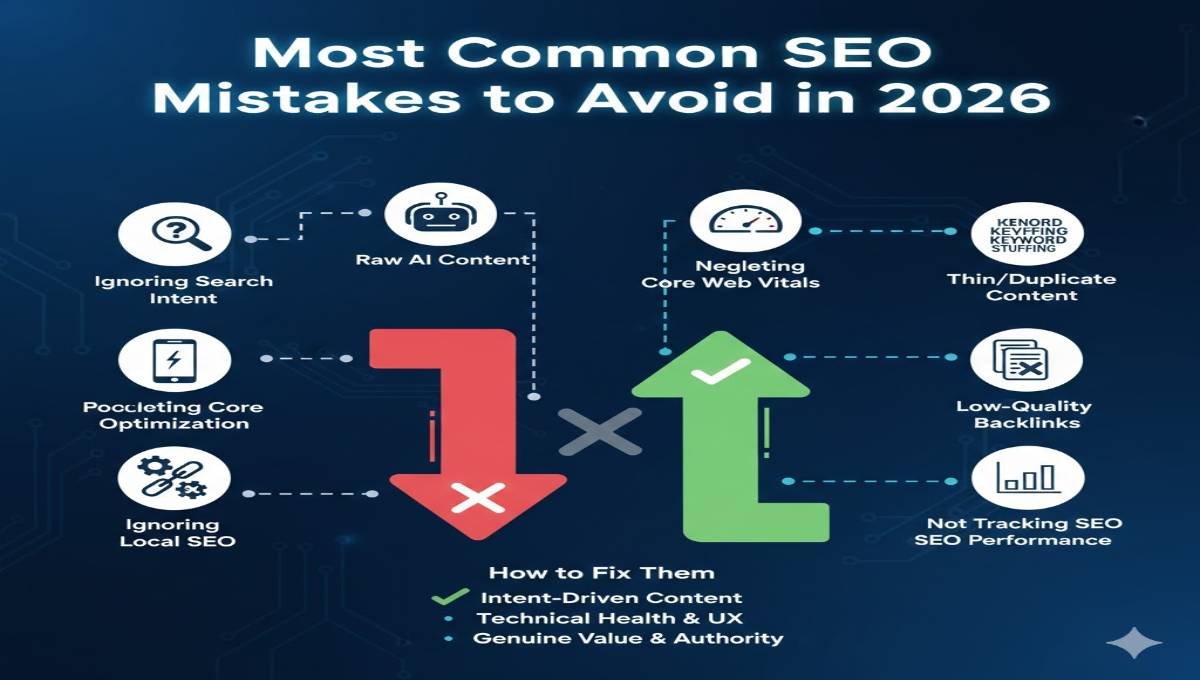

SEO in 2026 is more advanced, competitive, and user-focused than ever before. Google’s algorithms now rely heavily on AI, search intent, user experience, and content quality, which means even small SEO mistakes can significantly impact your rankings. Many websites still fail not because SEO doesn’t work—but because they keep repeating the same mistakes.
In this guide, we’ll explore the most common SEO mistakes to avoid in 2026 and show you how to fix them so your website can rank higher, drive consistent traffic, and stay ahead of algorithm updates.
1. Ignoring Search Intent
One of the biggest SEO mistakes in 2026 is creating content without understanding search intent.
Why it hurts SEO
Google wants to show results that best answer a user’s query. If someone searches for “best SEO tools” and your page is a basic definition of SEO, it won’t rank—even if keywords are optimized.
How to avoid it
- Analyze the top 10 ranking pages
- Identify if the intent is informational, commercial, or transactional
- Create content that directly fulfills that intent
2. Publishing AI Content Without Human Editing
AI tools are widely used, but publishing raw AI-generated content is a major mistake.
Why it hurts SEO
Google prioritizes helpful, original, and experience-based content. AI-written articles without depth, examples, or personalization often feel generic and fail to build trust.
How to avoid it
- Use AI for research or outlines
- Add real-world examples, insights, and expert opinions
- Improve tone, clarity, and readability manually
3. Keyword Stuffing Instead of Semantic SEO
Many people still believe repeating keywords improves rankings. In 2026, this approach backfires.
Why it hurts SEO
Google understands context, synonyms, and topical relevance. Keyword stuffing reduces content quality and harms user experience.
How to avoid it
- Use keywords naturally
- Focus on topic coverage instead of repetition
- Add related terms and questions users search for
4. Neglecting Core Web Vitals
Page experience remains a strong ranking factor in 2026.
Why it hurts SEO
Slow loading times, layout shifts, and poor interactivity increase bounce rates and reduce engagement—signals Google tracks closely.
How to avoid it
- Optimize images and videos
- Improve Largest Contentful Paint (LCP)
- Minimize JavaScript and unnecessary scripts
- Use fast and reliable hosting
5. Poor Mobile Optimization
Mobile-first indexing means Google evaluates your site based on its mobile version.
Why it hurts SEO
A site that looks good on desktop but performs poorly on mobile will struggle to rank.
How to avoid it
- Use responsive design
- Ensure buttons and text are mobile-friendly
- Avoid intrusive pop-ups on mobile devices
6. Thin, Duplicate, or Outdated Content
Low-quality content remains one of the most common SEO mistakes to avoid in 2026.
Why it hurts SEO
Google favors in-depth, unique, and updated content. Thin or duplicate pages dilute your site’s authority.
How to avoid it
- Regularly update old blog posts
- Combine similar or overlapping articles
- Add FAQs, examples, and actionable insights
7. Ignoring Technical SEO
Even great content won’t rank if search engines can’t crawl or index your site properly.
Why it hurts SEO
Broken links, crawl errors, and poor site structure confuse search engines and limit visibility.
How to avoid it
- Fix errors in Google Search Console
- Use clean, logical URL structures
- Implement schema markup where relevant
- Ensure proper internal linking
8. Low-Quality Backlink Building
Backlinks are still important, but quality matters more than ever.
Why it hurts SEO
Spammy or irrelevant backlinks can lead to ranking drops or penalties.
How to avoid it
- Focus on earning links from authoritative sites
- Use guest blogging strategically
- Create link-worthy content like guides and case studies
9. Ignoring Local SEO Opportunities
Local businesses often miss out on valuable traffic by skipping local SEO.
Why it hurts SEO
Without local optimization, your business won’t appear in local search results or map listings.
How to avoid it
- Optimize your Google Business Profile
- Use location-based keywords
- Encourage and respond to customer reviews
10. Not Tracking SEO Performance
Doing SEO without tracking results is one of the most costly mistakes.
Why it hurts SEO
Without data, you won’t know what’s working, what’s failing, or where to improve.
How to avoid it
- Track traffic, rankings, and conversions
- Use Google Analytics and Search Console
- Adjust strategy based on real performance data
Frequently Asked Questions (FAQs)
1. What are the most common SEO mistakes to avoid in 2026?
The most common SEO mistakes to avoid in 2026 include ignoring search intent, publishing low-quality or unedited AI content, keyword stuffing, poor mobile optimization, neglecting Core Web Vitals, and ignoring technical SEO issues like crawl errors and broken links.
2. Does SEO still work in 2026?
Yes, SEO absolutely works in 2026. However, it has evolved significantly. Modern SEO focuses more on user experience, helpful content, semantic search, and performance optimization rather than just keywords and backlinks.
3. Is AI-generated content bad for SEO in 2026?
AI-generated content is not bad for SEO if it is properly edited, original, and adds real value. Publishing raw AI content without human review, insights, or expertise can negatively impact rankings.
4. How important is search intent for SEO?
Search intent is one of the most important ranking factors in 2026. Even perfectly optimized content will not rank if it does not match what users are actually searching for.
5. Are backlinks still important in 2026?
Yes, backlinks are still important, but quality matters more than quantity. Relevant, authoritative backlinks help build trust and improve rankings, while spammy links can hurt your SEO.
Final Thoughts
Avoiding these most common SEO mistakes in 2026 can make a huge difference in your website’s success. SEO today is not about shortcuts—it’s about helpful content, strong user experience, and long-term consistency.
If you focus on intent-driven content, technical health, and genuine value, your website will not only survive future updates but continue to grow.
