

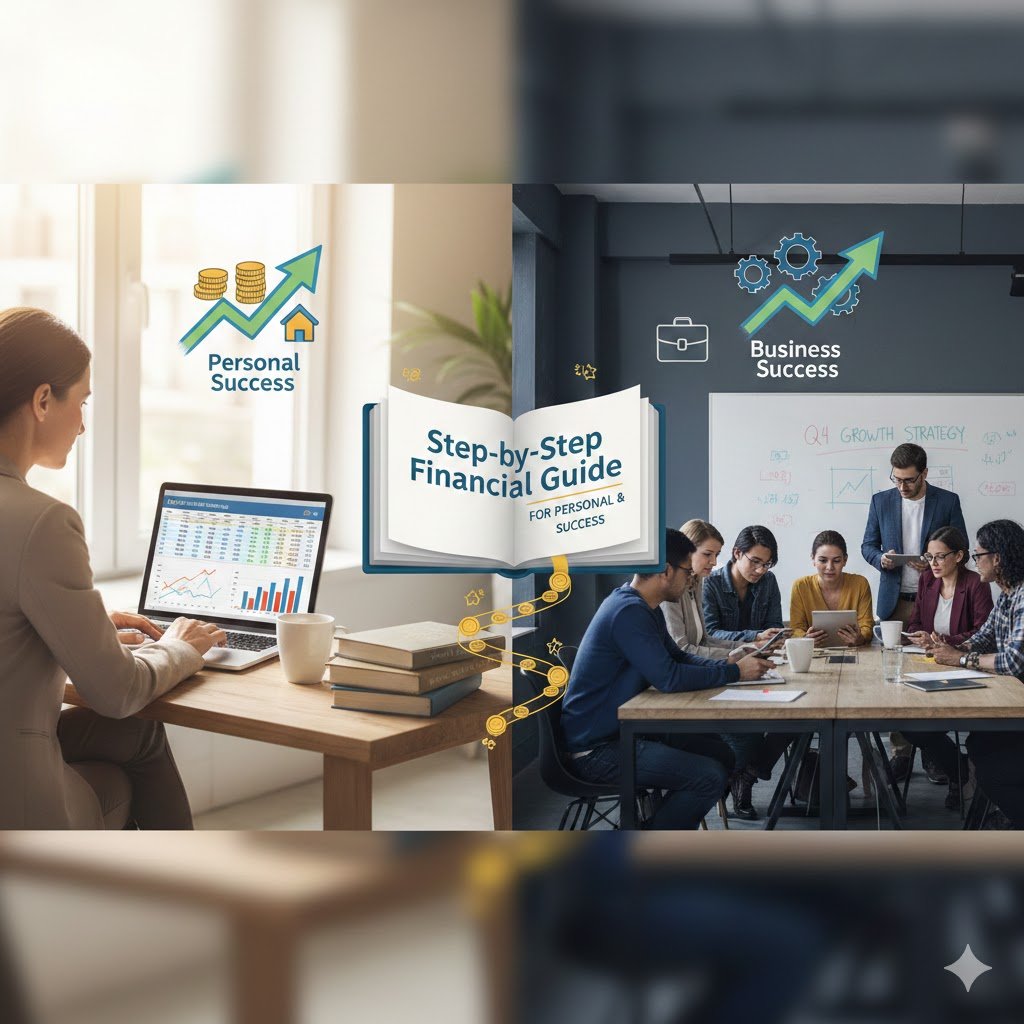

Managing money effectively is one of the most important skills you can develop—whether you’re handling personal finances, running a business, or juggling both. Financial success doesn’t happen overnight; it’s the result of consistent planning, smart decisions, and disciplined execution. This step-by-step guide will walk you through practical strategies to help you build stability, grow wealth, and create long-term success in both your personal and professional life.
Step 1: Understand Your Current Financial Position
The foundation of any solid financial guide starts with clarity. You need to know exactly where you stand before you can move forward.
For personal finances, list your income, fixed expenses, variable expenses, debts, and savings. For businesses, review cash flow statements, profit and loss reports, operating costs, and outstanding liabilities. This process may feel uncomfortable, but transparency is empowering. Once you see the full picture, you can make informed decisions instead of guesses.
Step 2: Set Clear and Measurable Financial Goals
Goals give direction to your money. Without them, it’s easy to overspend or lose focus.
Personal financial goals might include building an emergency fund, paying off debt, buying a home, or retiring early. Business goals could involve increasing revenue, reducing expenses, expanding operations, or improving profit margins. Make sure your goals are specific, measurable, achievable, relevant, and time-bound (SMART). This guide emphasizes that goals should be written down and reviewed regularly.
Step 3: Create a Realistic Budget
A budget is the backbone of financial success. It’s not about restriction—it’s about control.
On the personal side, allocate money for essentials, savings, investments, and discretionary spending. For businesses, create operational budgets that include payroll, marketing, inventory, and taxes. A strong financial guide encourages flexibility; your budget should adapt as your income or business conditions change.
Step 4: Build an Emergency Fund
Unexpected expenses can derail even the best financial plans. That’s why an emergency fund is non-negotiable.
Individuals should aim to save at least three to six months’ worth of living expenses. Businesses should maintain a cash reserve to cover operating costs during slow periods or emergencies. This step protects you from relying on credit or loans when things don’t go as planned.
Step 5: Manage and Reduce Debt Strategically
Not all debt is bad, but unmanaged debt can block financial growth.
Start by identifying high-interest debt such as credit cards or short-term loans. Prioritize paying these off first. For businesses, consider refinancing or consolidating debt to improve cash flow. A smart financial guide focuses on using debt as a tool—not a trap.
Step 6: Save and Invest Consistently
Saving alone isn’t enough; your money needs to grow.
For personal finances, consider diversified investments such as stocks, mutual funds, retirement accounts, or real estate, depending on your risk tolerance. Businesses can reinvest profits into growth opportunities, technology, or talent. This financial guide highlights consistency over timing—the habit of investing regularly matters more than trying to predict the market.
Step 7: Separate Personal and Business Finances
One of the most common mistakes entrepreneurs make is mixing personal and business money.
Open separate bank accounts, track expenses accurately, and pay yourself a salary instead of dipping into business funds. This step simplifies accounting, improves visibility, and protects you legally and financially. Any reliable guide for business success will stress this point.
Step 8: Monitor, Review, and Adjust Regularly
Financial planning isn’t a one-time task—it’s an ongoing process.
Review your finances monthly or quarterly. Track progress toward goals, analyze spending patterns, and make adjustments as needed. Markets change, businesses evolve, and personal priorities shift. A flexible financial guide helps you stay prepared instead of reactive.
Step 9: Seek Professional Advice When Needed
You don’t have to do everything alone.
Financial advisors, accountants, or business consultants can provide expert insights and help you avoid costly mistakes. While this guide provides a roadmap, personalized advice can accelerate your success and offer peace of mind.
Step 10: Build Financial Discipline and Long-Term Mindset
The final step is mindset. Financial success is built on patience, consistency, and discipline.
Avoid impulsive decisions, stay committed to your plan, and focus on long-term results instead of short-term wins. This step-by-step financial guide isn’t just about numbers—it’s about creating habits that support sustainable success.
Frequently Asked Questions (FAQ)
Q1: How often should I review my financial plan?
You should review personal and business finances at least once every three months, or whenever there is a major change in income, expenses, or goals.
Q2: Can one financial guide really work for both personal and business finances?
Yes, the core principles—budgeting, goal-setting, saving, and monitoring—apply to both. However, businesses require additional tracking and compliance considerations.
Q3: What’s the first step if I’m overwhelmed by finances?
Start by listing all income and expenses. Clarity reduces anxiety and helps you take control one step at a time.
Q4: How much should I save before investing?
Ideally, build an emergency fund first. Once that’s in place, you can begin investing regularly while continuing to save.
Q5: Is professional financial advice necessary?
Not always, but it can be extremely helpful for complex situations, tax planning, or long-term investment strategies.
