



Buying a business with no money may sound impossible, but in reality there are several financing strategies that make it achievable. Many entrepreneurs acquire businesses using seller financing, investor partnerships, or alternative funding sources instead of large upfront capital.
However, purchasing a business without personal investment also involves risks. Understanding financing structures, repayment terms, and potential liabilities is essential before entering any agreement.
Important: Before making financial commitments, consult a qualified financial advisor or legal professional.

Table of Contents
-
Ways to Buy a Business With No Money
-
Seller Financing
-
Equity Partnerships
-
Crowdfunding
-
Government Grants
-
Leveraging Existing Assets
-
Deferred Payment Agreements
-
Business Loans
-
-
Risks of Buying a Business With No Money
-
Why Business Loans Can Be a Safer Option
-
Steps to Get a Business Loan
-
Final Thoughts
Ways to Buy a Business With No Money
Purchasing a business without upfront capital requires creativity and strong negotiation skills. Instead of paying the full purchase price immediately, buyers often structure deals where payments are made over time or financed by external sources.
Below are some common strategies entrepreneurs use.
1. Seller Financing
Seller financing is one of the most widely used methods to acquire a business without significant upfront cash.
In this arrangement, the seller acts as the lender. Instead of receiving the entire purchase price at closing, the buyer makes payments over time based on an agreed schedule.
Often, the payments are funded from the profits generated by the business itself.
While this arrangement benefits buyers who lack capital, it requires strong trust between both parties. Sellers typically evaluate the buyer’s experience and ability to manage the business successfully before agreeing to this structure.
Key factors to negotiate include:
-
Interest rates
-
Payment duration
-
Monthly installment amounts
-
Down payment requirements
2. Equity Partnerships
Another way to purchase a business without personal capital is through equity partnerships.
In this model, an investor contributes funds to buy the business in exchange for ownership shares.
The investor may be:
-
A private investor
-
A business partner
-
A family member or friend
-
A venture capitalist
While this reduces financial pressure on the buyer, it also means sharing decision-making authority and future profits.
3. Crowdfunding
Crowdfunding platforms allow entrepreneurs to raise funds from a large number of small investors.
This strategy works best when the business has:
-
Strong brand potential
-
A compelling story
-
Clear growth opportunities
By presenting a convincing campaign, entrepreneurs can secure funding from supporters who believe in the business idea.
However, crowdfunding requires significant marketing effort and transparency with investors.
4. Government Grants
Many governments offer grants and financial programs to encourage entrepreneurship and business acquisitions.
These programs may target:
-
Specific industries
-
Regional economic development
-
Startups and small businesses
To qualify for grants, applicants usually need a well-prepared business plan with financial projections and operational strategies.
Although grants are highly beneficial because they do not require repayment, the application process can be competitive.
5. Leveraging Existing Assets
If the business includes valuable assets such as equipment, property, or inventory, these assets may be used as collateral to secure financing.
This approach allows buyers to obtain loans based on the value of the business itself rather than personal savings.
Asset-backed financing is commonly used in industries where equipment and infrastructure represent significant value.
6. Deferred Payment Agreements
Deferred payment agreements allow buyers to pay the seller gradually based on the future performance of the business.
Instead of paying upfront, the buyer commits to paying a portion of profits or revenue over time.
This structure aligns the interests of both parties because the seller benefits if the business performs well under new ownership.
However, detailed agreements are essential to avoid disputes over financial expectations.
7. Business Loans
While not technically “no money,” business loans can reduce the need for large personal investments.
Many lenders offer financing options that require minimal upfront capital if the borrower demonstrates strong business potential or provides collateral.
Types of loans may include:
-
Secured business loans
-
Acquisition loans
-
SBA-backed loans
-
Equipment financing
Loans provide structured repayment plans and often come with clearer legal protections than informal financing agreements.
Risks of Buying a Business With No Money
Although creative financing can make business acquisition possible, it also introduces several risks.
One major concern is the possibility of losing the business if payments cannot be maintained. Some agreements allow sellers to reclaim ownership if the buyer defaults on payments.
Other potential risks include:
-
High interest rates
-
Large balloon payments at the end of financing terms
-
Overestimating business profitability
-
Revenue decline after ownership transfer
-
Legal complications in poorly structured contracts
Sellers may also impose restrictions, such as preventing the buyer from reselling the business within a certain time frame.
Because of these factors, it is important to review all agreements carefully and seek professional advice before signing.
Why Business Loans Can Be a Safer Option
Compared to informal financing arrangements, structured business loans often provide more predictable financial planning.
1. Lower Interest Costs
Traditional lenders may offer competitive interest rates, especially for secured loans.
2. Flexible Loan Options
Borrowers can choose loan structures that suit their financial situation, including long-term and short-term options.
3. Full Ownership
Unlike equity partnerships, loans allow buyers to maintain complete ownership of the business.
4. Predictable Repayment Schedule
Fixed repayment plans make budgeting and cash flow management easier.
5. Faster Funding
Some lenders provide approvals quickly, which is useful when acquisition opportunities arise.
6. Reduced Legal Uncertainty
Loan agreements are usually standardized and regulated, reducing the risk of disputes.
Steps to Get a Business Loan
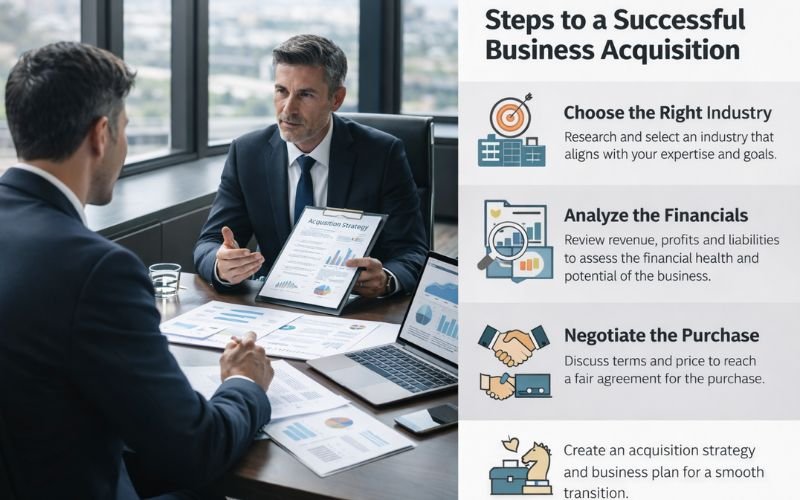
If you decide to pursue a business loan for acquisition, follow these steps:
1. Assess Your Funding Needs
Calculate how much financing you require to purchase the business and cover operational expenses.
2. Research Lenders
Compare different lenders and financing programs to find the best interest rates and terms.
3. Prepare Documentation
Most lenders require documents such as:
-
Bank statements
-
Business plans
-
Financial projections
-
Credit reports
4. Review Loan Offers
Carefully evaluate interest rates, repayment terms, and additional fees before choosing a lender.
5. Finalize the Agreement
Once approved, sign the loan agreement and proceed with the acquisition process.
Comparison Table: Financing Methods
| Method | Upfront Cost | Risk | Ideal Business Type |
| Seller Financing | Low | Medium | Service-based |
| Investor Partnership | None | Medium | Digital/Online |
| Earn-Out | None | Depends on profits | Growing businesses |
| Lease-to-Own | Low | Moderate | Small owner-operated |
| Asset-Based Loan | Low | Medium | Asset-heavy |
| Distressed Business | Very Low | High | Turnaround |
| Combined Methods | Low | Medium | Any |
Frequently Asked Questions (FAQ)
Can I really buy a business with no money?
Yes. Using seller financing, earn-out agreements, investors, or creative deals, you can acquire a business with little or no upfront cash.
How do I find businesses that allow creative financing?
Look for motivated sellers, struggling businesses, brokers, and online marketplaces.
Do I need a good credit score?
Traditional loans may require 650+, but seller financing and investors often have flexible requirements.
Is buying a business easier than starting one?
Usually yes. Existing businesses have customers, revenue, and processes in place, reducing risk.
What businesses are easiest to buy with no money?
- Service-based businesses
- Small local businesses
- Digital/online businesses
- Owner-operated businesses
Final Thoughts
Buying a business with no money is possible through creative financing strategies such as seller financing, partnerships, or asset-based loans.
However, these approaches come with financial risks and legal complexities. Conducting thorough research and seeking professional advice can help ensure you choose the safest and most sustainable acquisition strategy.
With careful planning and the right financing structure, entrepreneurs can successfully acquire and grow a business even with limited upfront capital.
