


Imagine spending months — even years — building your brand… only to receive a legal notice saying someone else owns your business name.
It happens more often than you think.
Thousands of small businesses are forced to rebrand — especially those who start without validating their idea from proven small business ideas or understanding the complete business setup guide. lose customers, and spend money on legal battles simply because they didn’t protect their name early. In today’s competitive market, your name isn’t just a label — it’s your identity, your reputation, and often your most valuable asset.
So the real question isn’t just “How can I trademark a name?” — it’s:
What Is a Trademark?
A trademark is a form of legal protection that secures your brand’s identity. It gives you exclusive rights to use a specific name, logo, symbol, or slogan for your products or services and prevents others from using similar marks that could confuse customers.
In simple terms, a trademark ensures that your brand belongs to you — and only you.
When you register a trademark, you gain the legal authority to protect your business name from copycats, build brand recognition, and establish trust in the marketplace. It also allows you to take action against anyone who tries to use your brand without permission.
How do you protect your business before it’s too late?
This guide breaks it all down in simple, practical steps so you can confidently trademark your business name and secure your brand for the long term.
How do you legally protect your business name?
To trademark a name, you must search existing trademarks, choose the correct class, and file an application with the USPTO. After review and approval, your trademark is registered, giving you legal rights to protect your business name nationwide.
Key Takeaways
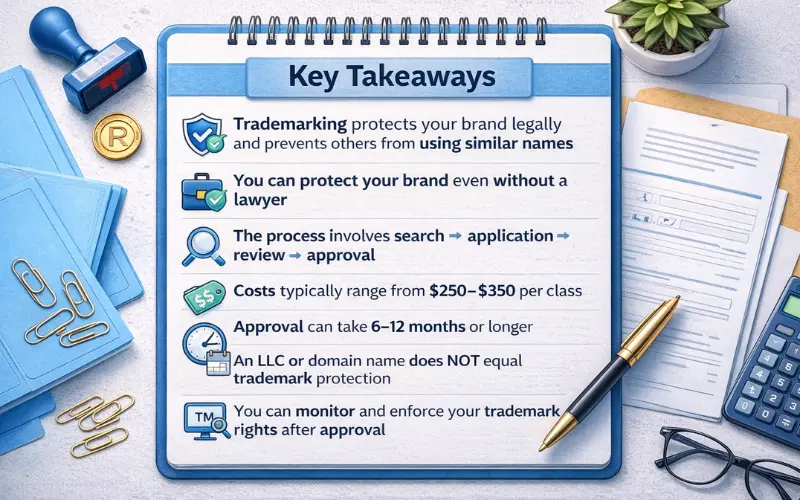
- Trademarking protects your brand legally and prevents others from using similar names
- You can protect your brand even without a lawyer
- The process involves search → application → review → approval
- Costs typically range from $250–$350 per class
- Approval can take 6–12 months or longer
- An LLC or domain name does NOT equal trademark protection
- You can monitor and enforce your trademark rights after approval
What Does It Mean to Trademark a Name?
A trademark is more than just paperwork — it’s your brand’s legal shield.
When you register your brand name legally, you gain exclusive rights to use that name for your goods or services. This prevents competitors from using similar names that could confuse customers.
What Can Be Trademarked?
- Business names
- Brand names
- Logos
- Taglines or slogans
Trademark vs Copyright vs Patent
When protecting your business, it’s important to understand the difference between a trademark, copyright, and patent. Each protects a different type of asset, and choosing the right one depends on what you want to secure.
Trademark
A trademark protects your brand identity — including your business name, logo, slogan, or product name. It prevents others from using similar marks that could confuse customers.
Best for: Branding and business identity
Copyright
A copyright protects original creative works such as written content, images, videos, music, and designs. It ensures that others cannot copy, reproduce, or distribute your work without permission.
Best for: Content and creative assets
Patent
A patent protects inventions, processes, or unique technologies. It gives the inventor exclusive rights to make, use, or sell the invention for a specific period.
Best for: New inventions and innovations
Key Differences at a Glance
| Feature | Trademark | Copyright | Patent |
| Protects | Brand identity | Creative works | Inventions |
| Examples | Business name, logo | Articles, videos, music | Machines, processes |
| Duration | 10 years (renewable) | Life + 60/70 years | 20 years |
| Registration | Required for full protection | Automatic (in most cases) | Required |
Final Takeaway
If you want to protect your business name or brand, you need a trademark.
If you’re protecting content, go for copyright.
If you’ve created something new and innovative, a patent is the right choice.
Do You Need a Trademark for Your Name?
Short answer: Yes — if you’re serious about your business.
Why Trademarking Matters
- Prevents copycats from using similar names
- Avoids legal disputes and forced rebranding
- Builds credibility and trust
- Increases business value for investors
Strong branding also helps you build brand awareness and apply better risk management strategies to protect your business from future legal issues.
Real-World Example
Imagine launching a brand called “Urban Brew” — growing it on social media — only to discover someone else already trademarked it.
You may be legally forced to:
- Change your name
- Rebuild branding
- Lose customers
That’s why smart founders trademark early.
Types of Trademarks You Can Register
Understanding this helps you make the right choice when filing.
1. Word Mark (Most Powerful)
- Protects the name itself
- Example: “Nike”
2. Design Mark
- Protects logo/design
- Example: Nike swoosh
3. Combined Mark
- Name + logo together
Pro Tip: If your goal is to trademark business name, go with a word mark for maximum protection.
Step-by-Step: How to Trademark a Name
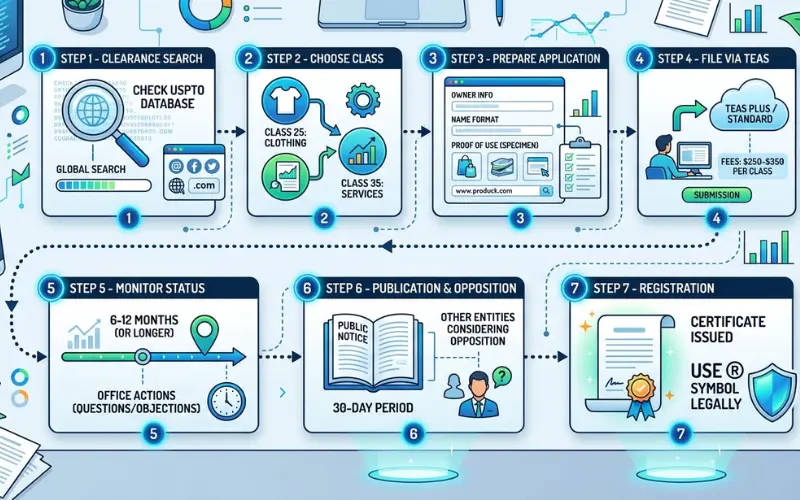
Step 1 – Search Existing Trademarks
Before anything, check availability.
- Use USPTO database
- Search Google, domains, social media
Avoid names that are:
- Too similar
- Already in use in your industry
Step 2 – Choose the Right Trademark Class
Trademarks are categorized by industry.
Examples:
- Class 25 → Clothing
- Class 35 → Business services
Choosing the wrong class = rejection risk
Step 3 – Prepare Your Application
You’ll need:
- Owner details
- Business name format
- Proof of usage (or intent to use)
Step 4 – File Your Application
Submit via USPTO:
- TEAS Standard or TEAS Plus
- Fees: $250–$350 per class
Step 5 – Monitor Application Status
Timeline:
- 6–12 months (sometimes longer)
You may receive:
- Office actions (questions or objections)
Step 6 – Publication & Opposition
- Published publicly for 30 days
- Others can oppose your trademark
Step 7 – Get Your Trademark
Once approved:
- You receive certificate
- Use ® symbol legally
How Much Does It Cost to Trademark a Name?
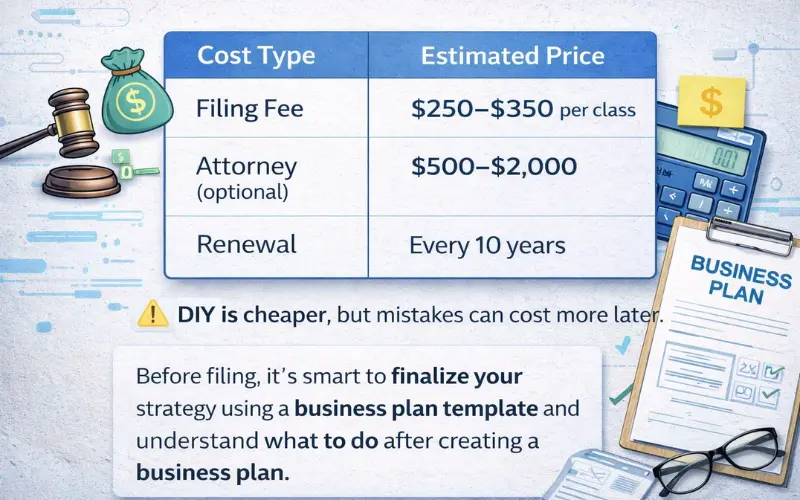
| Cost Type | Estimated Price |
| Filing Fee | $250–$350 |
| Attorney (optional) | $500–$2,000 |
| Renewal | Every 10 years |
DIY is cheaper, but mistakes can cost more later.
Before filing, it’s smart to finalize your strategy using a business plan template and understand what to do after creating a business plan.
How Long Does It Take?
- Average: 6–12 months
- Complex cases: 12–18 months
Delays happen due to:
- Errors
- Similar trademarks
- Legal objections
Trademark vs LLC vs Domain Name
| Feature | Trademark | LLC | Domain |
| Legal protection | ✅ Strong | ❌ Limited | ❌ None |
| Nationwide rights | ✅ Yes | ❌ No | ❌ No |
| Prevent name copying | ✅ Yes | ❌ No | ❌ No |
| Cost | Medium | Low | Low |
| Best for | Brand protection | Business structure | Online presence |
Important: Registering an LLC does NOT mean you trademark your business name
Can You Trademark Without a Lawyer?
Yes — many founders do.
DIY Pros:
- Lower cost
- Full control
Cons:
- Higher rejection risk
- Legal mistakes
If your brand is important, consider expert help.
Common Mistakes to Avoid
- Skipping trademark search
- Choosing generic names
- Filing wrong class
- Ignoring deadlines
These mistakes can cost time, money, and brand identity
Comparison Table: DIY vs Hiring a Lawyer
| Option | Pros | Cons | Best For |
| DIY Filing | Cheap, fast | Risky | Small businesses |
| Trademark Lawyer | Accurate, safe | Expensive | Serious brands |
Expert Insights
“Your trademark is your business identity in the marketplace. Protecting it early saves significant legal costs later.”
— Trademark Attorney Insight
“Most founders delay trademarking — and that’s the biggest mistake. The earlier you secure it, the stronger your position.”
Experts agree: don’t wait until your brand grows
Final Thoughts
Trademarking your name isn’t just a legal step — it’s a strategic business move.
If you’re building something long-term, protecting your brand should be a priority from day one.
Whether you want to protect your brand legally or simply understand the process, the key is taking action early.
Call to Action
If you found this guide helpful:
- Bookmark this page
- Share it with other business owners
- Start your trademark search today
Because in business —
the name you protect today becomes the brand you grow tomorrow.
FAQs
1. How do I check if a name is trademarked?
Search the USPTO database or online trademark tools to verify availability.
2. Can I trademark a name for free?
No, official filing requires a fee. Some platforms offer free search tools.
3. Do I need an LLC to trademark a name?
No. You can trademark a name without forming an LLC.
4. How long does a trademark last?
A trademark lasts 10 years and can be renewed indefinitely.
5. Can I trademark my business name internationally?
Yes, but you must apply separately in each country.
6. What happens if someone copies my trademark?
You can take legal action and enforce your rights.
7. Is trademarking worth it for small businesses?
Yes — it protects your brand and prevents costly legal issues.
