

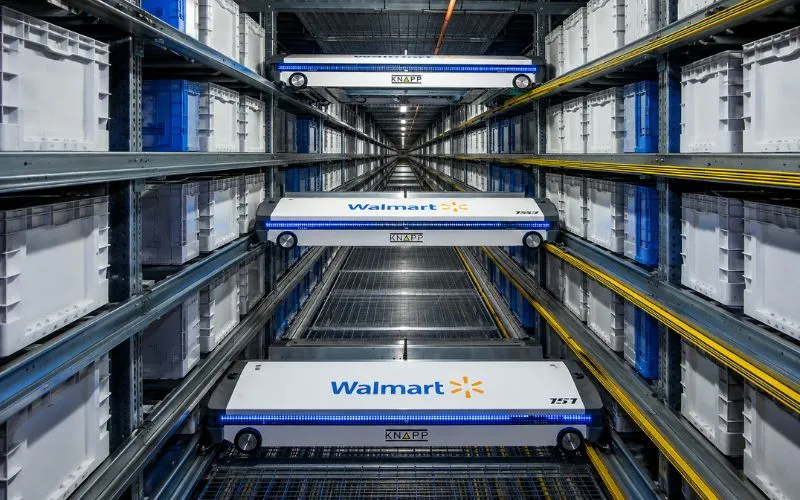

Walmart has reportedly laid off or relocated around 1,000 corporate employees as part of a major restructuring tied to artificial intelligence, automation, and centralized technology operations. The move marks one of the clearest signs yet that the retail industry is entering a new AI-driven era where companies are redesigning not only customer experiences, but also the structure of corporate work itself.
The timing is especially significant because the restructuring comes shortly after John Furner officially took over as CEO in early 2026. Industry analysts view this as Furner’s first major strategic move — a signal that Walmart intends to accelerate operational efficiency, AI adoption, and centralized decision-making to compete more aggressively in a rapidly evolving retail market.
While Walmart describes the changes as organizational alignment, the broader message is clear: artificial intelligence is beginning to reshape white-collar corporate jobs just as dramatically as it previously transformed warehouses, logistics, and manufacturing.
A Defining Moment in Walmart’s AI Transformation
This is not simply another round of corporate layoffs.
The Walmart corporate layoffs represent a major turning point in the company’s evolution from a traditional retail chain into a technology-driven retail ecosystem powered by AI, automation, data analytics, and digital commerce infrastructure.
Under CEO John Furner, Walmart has intensified its focus on:
- Artificial intelligence
- Retail automation
- Predictive logistics
- Digital advertising
- AI-powered merchandising
- Centralized corporate operations
Executives leading Walmart’s technology transformation — including AI leadership teams and CTO divisions — are reportedly pushing what insiders describe as a “super-agent” strategy designed to embed AI across nearly every layer of operations.
The restructuring affects teams connected to:
- Technology operations
- Product management
- E-commerce systems
- Corporate strategy
- Retail media advertising
- Supply chain planning
Some employees are being offered relocation packages to Walmart hubs in Bentonville, Arkansas, and Northern California, while others are being laid off or reassigned internally.
Key Takeaways
- Walmart is laying off or relocating around 1,000 corporate employees
- The restructuring is tied closely to Walmart’s aggressive AI transformation strategy
- CEO John Furner is positioning Walmart as a technology-first retail company
- AI systems like “My Assistant,” “Sparky,” and “Wally” are central to Walmart’s operational future
- The company is centralizing teams and reducing remote flexibility for many roles
- White-collar corporate work is increasingly being reshaped by AI and automation
- Walmart is responding to growing pressure from Amazon, Costco, and Aldi
Walmart’s “Super Agent” AI Strategy Explained
One of the most important developments behind Walmart AI restructuring is the company’s aggressive rollout of internal and customer-facing AI systems.
Walmart is no longer experimenting with basic automation tools. The company is building what executives internally describe as “super agents” — AI systems designed to assist workers, merchants, planners, and customers across the organization.
Key AI tools reportedly include:
My Assistant
An internal generative AI platform designed for Walmart corporate employees. It helps automate reporting, summarize meetings, analyze documents, and streamline administrative workflows.
Sparky
A consumer-facing AI shopping assistant aimed at improving product discovery, personalization, and customer support experiences.
Wally
An AI-powered merchandising and planning assistant designed to help Walmart merchants forecast demand, manage inventory, and optimize product decisions.
The significance of these tools is enormous.
Tasks that once required multiple corporate departments can now be partially automated or streamlined using AI-powered systems. This is one reason Walmart feels confident consolidating overlapping teams and restructuring corporate operations.
In simple terms:
AI is not just helping Walmart operate faster — it is changing how the company organizes work itself.
The Shift: From “Experimenting With AI” to Full Transformation
Walmart leadership has reportedly described 2026 as the year artificial intelligence moves from experimental technology to a core operating system inside the company.
This 1,000-person restructuring is the clearest physical manifestation of that transition.
How Different Departments Are Being Reshaped
| Department | AI Impact / Restructuring Goal |
| Supply Chain | Moving from manual forecasting to AI-led predictive logistics |
| Merchandising | Consolidating teams around “Wally” AI systems |
| Customer Technology | Expanding and centralizing the “Sparky” shopping assistant |
| Marketing & Retail Media | Automating ad optimization and bidding systems |
| Corporate Operations | Using AI tools like “My Assistant” to reduce repetitive workflows |
This restructuring shows how deeply AI is becoming embedded into Walmart’s operational strategy.
Walmart Is Also Quietly Ending Remote Corporate Work
Another major dimension of this restructuring is Walmart’s growing push toward centralized in-person collaboration.
By requiring many employees to relocate to Bentonville or Northern California offices, Walmart is effectively reducing remote flexibility for large portions of its corporate workforce.
The company appears to believe that AI innovation requires what executives describe as “radical collaboration” between:
- Engineers
- Product managers
- Retail strategists
- AI developers
- Leadership teams
This reflects a growing trend among major corporations moving away from fully remote work structures in favor of centralized operational hubs.
However, this shift is controversial.
Many employees who adapted to remote and hybrid work environments during previous years may see mandatory relocation as a major disruption to both career and personal stability.
Why This Matters Beyond Walmart
The Walmart layoffs are important because they reflect a broader economic transformation already spreading across industries.
For years, automation discussions focused mainly on warehouse labor and manufacturing jobs.
Now, AI is increasingly affecting:
- Analysts
- Planners
- Marketing teams
- Product managers
- Corporate strategists
- Administrative operations
This represents the next phase of AI disruption: white-collar transformation.
Businesses are realizing they can operate with:
- Smaller teams
- Faster workflows
- AI-assisted decision-making
- Centralized digital systems
Walmart may simply be one of the first major retailers implementing this transition at large scale.
Walmart vs Amazon, Costco, and Aldi
While Amazon remains Walmart’s biggest technology competitor, the company is also facing increasing pressure from retailers like Costco and Aldi, particularly around operational efficiency and pricing power.
Today’s retail competition revolves around:
- Automation efficiency
- Supply chain intelligence
- AI-powered forecasting
- Delivery speed
- Retail media revenue
- Cost optimization
Amazon dominates through logistics and AI infrastructure, while Costco and Aldi continue applying pressure through lean operational models and aggressive pricing strategies.
Walmart’s response is becoming increasingly clear:
centralize operations, automate workflows, and scale AI across every major business division.
The Human Cost Behind Corporate Efficiency
Although companies often frame restructuring around words like “optimization” and “alignment,” the human impact remains significant.
For many affected employees, this is not merely a business transition — it is a disruption involving:
- Career uncertainty
- Relocation pressure
- Financial stress
- Family decisions
- Emotional instability
As corporations continue pursuing AI efficiency, public scrutiny around workforce responsibility and ethical restructuring will likely increase.
Acknowledging that human cost is important because AI transformation is not only a technology story — it is also a workplace and societal story.
What Employees Should Learn From This
The Walmart restructuring also signals important lessons for the broader workforce.
1. AI Literacy Is Becoming Essential
Understanding automation, analytics, and AI-powered systems is increasingly valuable across industries.
2. Adaptability Will Matter More Than Job Titles
Corporate structures are evolving rapidly, and workers who continuously learn new tools may remain more competitive.
3. White-Collar Work Is Changing
Many future jobs may involve managing AI systems rather than performing repetitive operational tasks manually.
4. Centralized Collaboration Is Returning
Some corporations are moving away from fully distributed teams to accelerate innovation and execution speed.
Final Thoughts
Walmart’s decision to lay off or relocate approximately 1,000 corporate workers may ultimately be remembered as more than a restructuring story.
It could become one of the defining examples of how artificial intelligence transforms corporate America.
The company is moving aggressively toward a future built around AI-powered operations, centralized collaboration, automation, and data-driven retail systems. Under John Furner, Walmart appears determined to compete not only as a retailer, but as a technology ecosystem capable of operating at massive scale with greater efficiency.
For employees, the message is equally clear:
the future of corporate work will increasingly reward adaptability, digital fluency, and AI literacy.
And for the broader retail industry, Walmart’s restructuring may signal what many companies will eventually attempt next.
For more information visit:- businesslyf.com
FAQs
Why is Walmart laying off corporate employees?
Walmart is restructuring parts of its corporate workforce as the company expands its use of artificial intelligence, automation, and centralized technology operations. The goal is to improve efficiency, streamline workflows, and accelerate digital transformation across retail operations.
How many employees were affected by the Walmart restructuring?
Reports indicate that around 1,000 corporate employees were either laid off, relocated, or reassigned as part of Walmart’s latest restructuring initiative tied to AI and operational changes.
What is Walmart’s AI strategy?
Walmart is investing heavily in AI-powered systems designed to improve logistics, merchandising, customer experience, and internal operations. The company is reportedly building “super-agent” AI tools that assist employees, planners, and customers across multiple business divisions.
What are Walmart AI tools like “My Assistant,” “Sparky,” and “Wally”?
“My Assistant” is an internal AI productivity tool for corporate employees, while “Sparky” is a customer-facing shopping assistant. “Wally” focuses on merchandising, inventory forecasting, and product planning using AI-driven analytics.
Is AI replacing white-collar corporate jobs?
AI is increasingly automating repetitive administrative and analytical tasks traditionally handled by white-collar teams. While AI is not replacing every role, companies are reorganizing departments and reducing overlapping workflows as automation becomes more advanced.
Why is Walmart centralizing employees in Bentonville and California?
Walmart appears to be pushing for more in-person collaboration between engineers, AI teams, product managers, and corporate leadership. The company believes centralized hubs may accelerate innovation, decision-making, and AI development.
How does this compare to competitors like Amazon?
Retail competition is increasingly focused on AI, logistics, supply chain intelligence, and operational efficiency. Walmart is expanding automation and digital infrastructure to compete more aggressively with companies like Amazon, as well as low-cost retailers such as Costco and Aldi.
What does Walmart’s restructuring mean for the future of work?
The restructuring highlights how AI is transforming corporate work environments. Future jobs may increasingly involve managing AI systems, interpreting data, and overseeing automated workflows rather than handling repetitive manual processes.
Will more companies follow Walmart’s AI restructuring model?
Many analysts believe Walmart’s restructuring reflects a broader trend across industries. As AI tools become more capable, more companies may centralize operations, automate workflows, and redesign corporate structures around AI-assisted systems.
