


Introduction
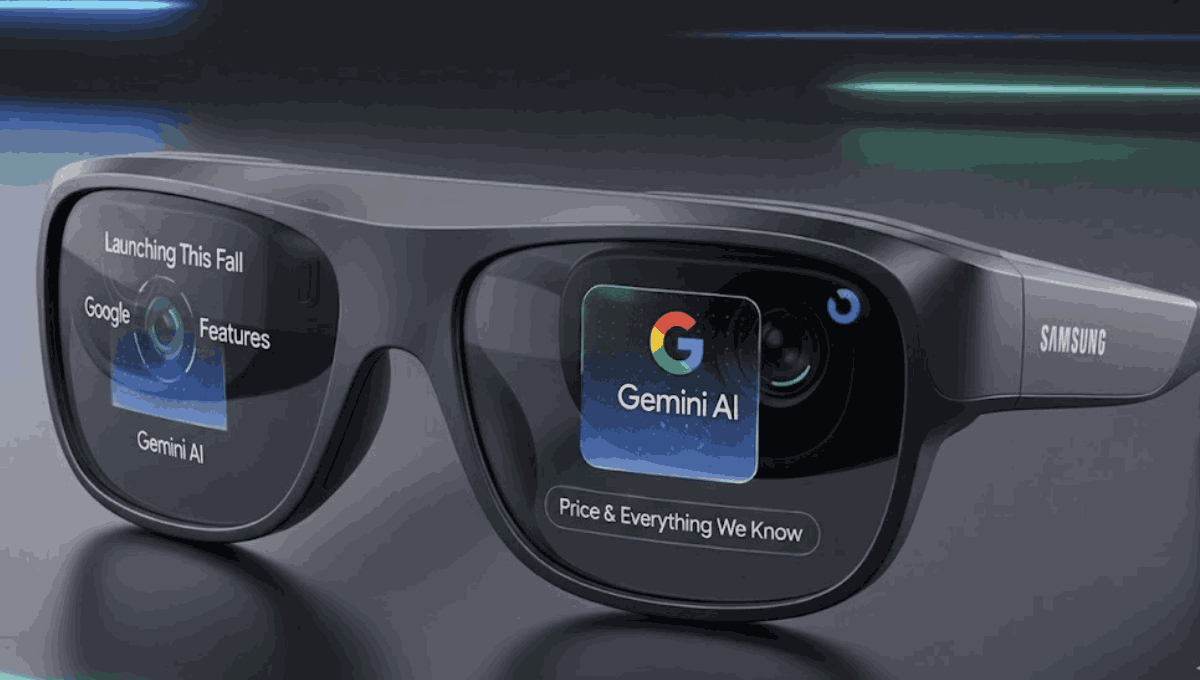
After years of rumors, leaks, and speculation, Google and Samsung have officially entered the AI smart glasses race in a serious way.
At the annual Google I/O 2026 developer conference held in Mountain View on May 19, Google and Samsung unveiled their new generation of AI-powered smart glasses — described by the companies as “intelligent eyewear.”
The announcement marks one of the biggest moments in wearable technology in years. More importantly, it signals Google’s second attempt at smart glasses after the failure of Google Glass more than a decade ago.
This time feels very different.
Instead of futuristic-looking hardware aimed at developers, Google and Samsung are focusing on stylish, everyday wearable glasses powered by Gemini AI and built around practical real-world use.
The glasses are expected to launch in select markets later this fall.
Key Takeaways
- Google and Samsung officially unveiled AI smart glasses at Google I/O 2026
- The glasses are powered by Gemini AI
- First-generation models do not include built-in displays
- Features include voice commands, music, calls, photos, and AI assistance
- Compatible with both Android and iPhone devices
- Built on Google’s new Android XR platform
- Fashion partnerships include Gentle Monster and Warby Parker
- Launch expected in Fall 2026
- Pricing has not yet been announced
Quick Overview
| Feature | Details |
| Product | Google + Samsung AI Smart Glasses |
| Launch Window | Fall 2026 |
| AI Assistant | Gemini |
| Display | No in-lens display |
| Features | Calls, music, photos, AI voice commands |
| Platform | Android XR |
| Compatibility | Android + iOS |
| Fashion Partners | Gentle Monster, Warby Parker |
| Main Competitor | Meta Ray-Ban Smart Glasses |
What Are Google and Samsung’s AI Smart Glasses?
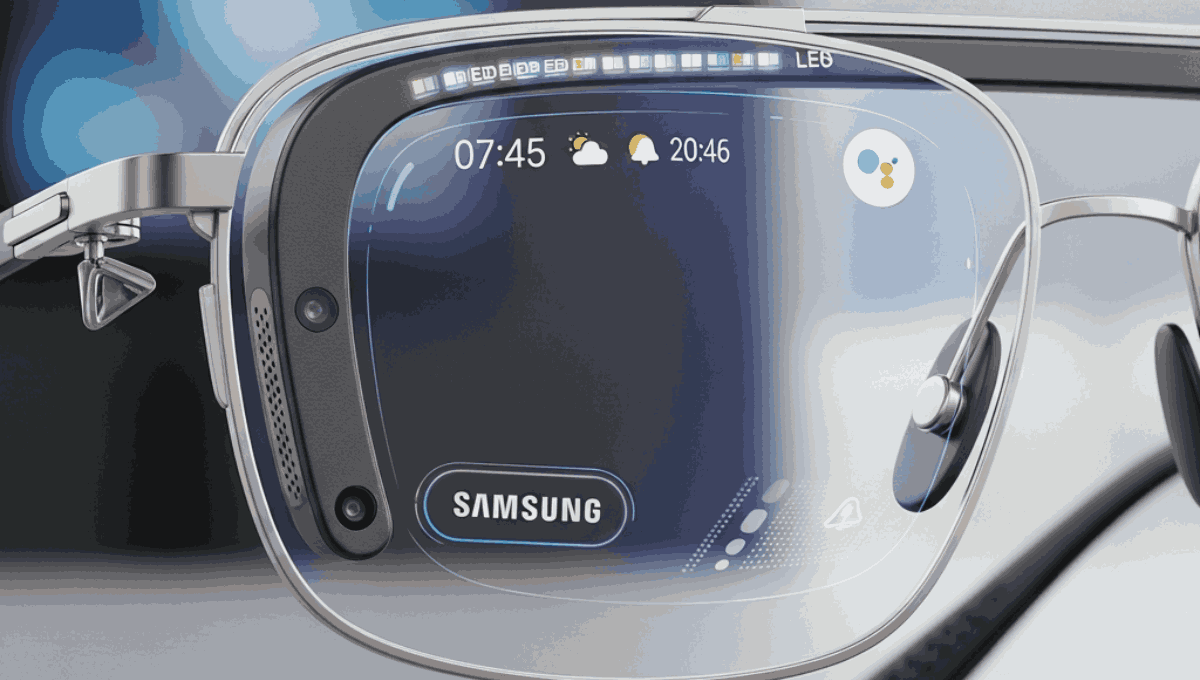
At their core, the new glasses are smart audio wearables designed to work alongside a smartphone.
The frames include:
- built-in speakers
- microphones
- onboard cameras
- Gemini AI integration
Unlike advanced augmented reality headsets, these glasses do not project digital visuals into the user’s field of view. There is no display hidden inside the lenses — at least not in this first generation.
Instead, the experience focuses on hands-free AI interaction.
Users can:
- listen to music
- make phone calls
- receive notifications
- take photos
- ask questions
- control apps using voice commands
All without pulling out a phone.
During the keynote presentation, Google demonstrated Gemini placing a food order through DoorDash entirely through voice interaction. The user simply spoke naturally, while Gemini handled navigation and ordering automatically in the background.
That demo became one of the most talked-about moments from the event because it showed AI acting more like a true assistant instead of just responding to simple commands.
If Google can deliver that experience reliably in daily life, it could become the biggest advantage these glasses have over current competitors.
Gemini AI Is the Real Product
The hardware matters, but the real story here is Gemini.
Google has spent the last few years aggressively expanding Gemini across Android, Search, Workspace, and its broader ecosystem. The company says Gemini now serves more than 900 million monthly active users globally.
These glasses are essentially another major expansion point for the AI assistant.
Rather than interacting with AI through a phone screen, users will be able to speak naturally while walking, commuting, shopping, or working.
That “heads-up, hands-free” experience is exactly what Google and Samsung are betting on.
Samsung executive Jay Kim described the product as an “important step in Samsung’s vision for AI,” saying the goal is to help users stay connected without constantly looking down at a screen.
Fashion Finally Matters
One of the biggest lessons Google learned from the original Google Glass era is simple: people will not wear awkward-looking technology on their face.
This time, the companies are approaching design very differently.
Instead of building frames entirely in-house, Google partnered with established eyewear brands to make the glasses feel like normal fashion accessories rather than experimental gadgets.
Gentle Monster Partnership
Gentle Monster is known for bold, fashion-forward designs and has become one of the most influential luxury eyewear brands globally.
Google reportedly invested $100 million into Gentle Monster in 2025, acquiring a minority stake in the company.
The partnership suggests Google wants these glasses to appeal to younger consumers and style-conscious buyers — not just tech enthusiasts.
Warby Parker Partnership
Warby Parker brings a completely different audience.
The company is known for affordable, minimalist, everyday eyewear. Its involvement could help smart glasses feel more mainstream and approachable for average consumers.
Together, the two partnerships create a smart strategy:
- fashion-forward premium styles
- simple everyday styles
- broader market appeal
That alone could help avoid many of the social problems that hurt Google Glass years ago.
How They Compare to Meta’s Ray-Ban Smart Glasses
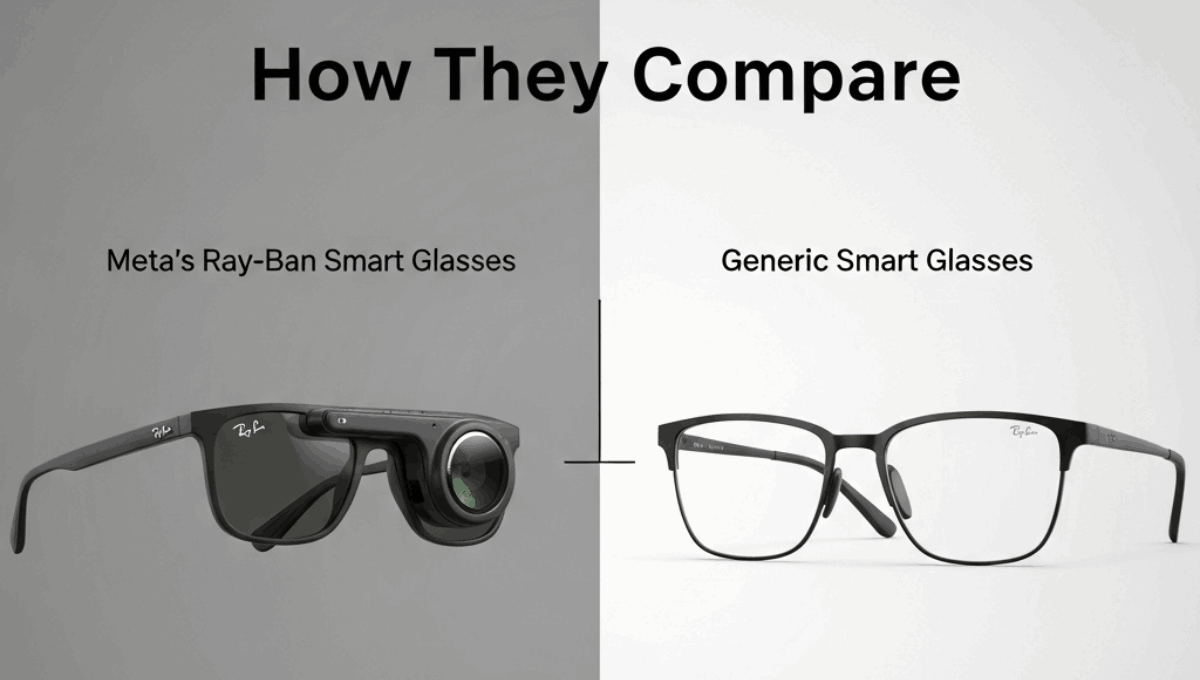
Google and Samsung are entering a market that Meta has already helped validate.
Meta’s Ray-Ban Meta Smart Glasses reportedly sold around seven million units during 2025, proving there is genuine consumer demand for wearable AI products that look stylish and work well.
Meta expanded its lineup further with display-enabled models that can show notifications, captions, and photo previews directly inside the lens.
Google’s first-generation glasses do not yet offer that capability.
However, Google may have an edge in AI intelligence itself.
Gemini’s integration with Android services, Google Search, Maps, Gmail, YouTube, and third-party apps could potentially create a much deeper assistant experience than competitors currently offer.
The bigger long-term strategy is also becoming clearer.
Google is not just launching one pair of glasses — it is building an entire smart eyewear ecosystem through Android XR.
What Is Android XR?
Android XR is Google’s new operating platform designed specifically for extended reality devices.
Think of it as Android for smart glasses and wearable computing.
Google confirmed two categories of products under Android XR:
1. AI Audio Glasses
Launching first in Fall 2026, these glasses focus on:
- voice interaction
- cameras
- microphones
- speakers
- Gemini AI
No built-in display is included.
2. Advanced AR Glasses
Future versions are expected to include in-lens displays capable of showing:
- navigation directions
- translations
- notifications
- contextual information
- augmented reality overlays
Google appears to be taking the same approach that helped Android dominate smartphones:
- one operating system
- multiple hardware partners
- broad ecosystem support
The Android XR ecosystem is expected to include products from Samsung, XREAL, and additional hardware partners in the future.
What We Still Don’t Know
Despite the excitement, several important details remain unclear.
Google and Samsung have not yet revealed:
- pricing
- battery life
- camera specifications
- storage capacity
- supported countries
- offline AI capabilities
- subscription requirements
- exact release date
More information is expected during Samsung Galaxy Unpacked July 2026 later this summer.
Pricing, in particular, could determine whether these glasses become mainstream or remain niche tech products.
Potential Challenges
The excitement around AI glasses is real, but there are still major challenges ahead.
Privacy Concerns
Wearable cameras continue to raise concerns around recording people in public spaces without permission.
Google Glass faced intense backlash over privacy fears years ago, and modern AI glasses will likely face similar scrutiny.
Battery Life
AI processing, microphones, cameras, and wireless connectivity all consume significant power.
If users need to recharge the glasses constantly, adoption could suffer.
Real-World AI Accuracy
Live demos are one thing.
Daily real-world usage is another.
Gemini will need to consistently understand context, interpret speech accurately, and complete actions reliably in noisy, unpredictable environments.
Pricing Pressure
Meta succeeded partly because its Ray-Ban smart glasses were priced relatively accessibly.
If Google and Samsung launch at premium luxury pricing, mass adoption may become difficult.
Apple Is Quietly Watching
No discussion about the future of smart glasses is complete without mentioning Apple.
Industry reports suggest Apple is actively developing its own smart glasses products, including versions with cameras and AI features.
Although Apple has not officially confirmed anything, many analysts believe the company sees wearable AI as the next major computing platform after smartphones.
That possibility adds even more importance to Google’s Android XR strategy.
The company wants to establish its ecosystem before Apple enters the market and reshapes consumer expectations.
Why This Time Feels Different
More than ten years ago, Google Glass became one of the most famous failures in modern tech history.
The product arrived too early.
The design felt awkward.
Privacy concerns exploded online.
And consumers simply were not ready.
But the environment in 2026 looks completely different.
AI assistants are dramatically more capable.
Consumers are comfortable wearing technology every day.
Wireless earbuds and smartwatches normalized wearable tech.
And Meta has already proven there is real demand for stylish smart eyewear.
The timing may finally be right.
Industry data also supports the momentum. AI smart glasses sales reportedly surged more than 250 percent during the first half of 2025 compared to the previous year.
What once looked like a niche experiment is quickly becoming one of the fastest-growing areas in consumer technology.
Conclusion
Google and Samsung’s AI smart glasses announcement could become one of the defining technology moments of the decade.
The companies are combining:
- powerful AI
- fashionable design
- wearable convenience
- cross-platform compatibility
- and a broader ecosystem strategy through Android XR
That combination gives them a real opportunity to compete directly with Meta — and eventually Apple — in what may become the next major computing platform.
Of course, success is far from guaranteed.
Everything will depend on:
- real-world Gemini performance
- comfort and usability
- battery life
- privacy management
- and pricing
Still, for the first time since the original Google Glass era, smart eyewear genuinely feels ready for the mainstream.
And this time, consumers might be ready too.
Frequently Asked Questions
Do Google and Samsung smart glasses have a display?
No. The first-generation models announced at Google I/O 2026 focus on audio, cameras, microphones, and Gemini AI functionality without built-in lens displays.
When will Google AI smart glasses launch?
Google and Samsung confirmed the glasses will launch in select markets during Fall 2026.
Will the glasses work with iPhones?
Yes. The glasses are compatible with both Android and iOS devices.
What is Android XR?
Android XR is Google’s operating system designed for smart glasses, AR headsets, and wearable extended reality devices.
How are these different from Meta Ray-Ban glasses?
Google’s glasses focus heavily on Gemini AI integration and Android XR ecosystem support, while Meta currently offers some models with built-in display functionality.
For More Information:-businesslyf
