

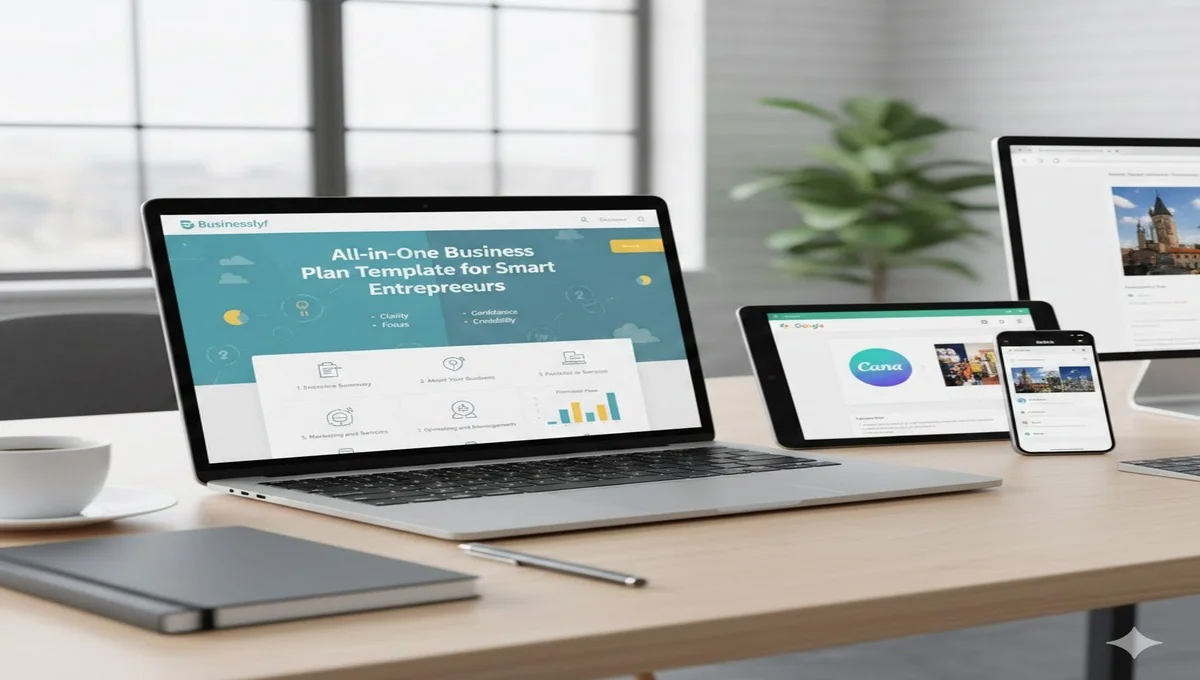

Starting a business is exciting, but it can also feel overwhelming. Without a clear plan, it’s easy to get stuck or make costly mistakes. That’s why smart entrepreneurs rely on a business plan—it acts as a roadmap for your business and helps you reach your goals faster.
In this guide, you’ll learn what a business plan template is, why it matters, and how to use it step by step — all in simple language that anyone can follow.
Why Smart Entrepreneurs Use a Business Plan Template
Many people think great ideas alone can fuel success — but reality shows otherwise. Planning your business helps you think through challenges before they become problems.
Here’s why entrepreneurs at every stage should use a template:
- Clarity: It helps you organize your thoughts and structure your ideas.
- Focus: You set clear objectives and timelines.
- Confidence: You understand your market, your customers, and your finances.
- Credibility: Investors, partners, and lenders trust businesses with clear plans.
What Is an All‑In‑One Business Plan Template?
An all‑in‑one business plan template is a ready‑made document that includes all the key sections your plan needs. Instead of starting with a blank page, you fill in the template with your business details.
This makes planning:
- Faster
- Clearer
- Less overwhelming
And the best part? You can customize it for your industry — whether you’re in digital marketing, tech, retail, services, or local business.
Sections of the Businesslyf Business Plan Template
Here’s an easy breakdown of the core sections you’ll find in an all‑in‑one business plan:
1. Executive Summary
This is your opening snapshot — a short introduction to your business.
Write briefly about:
- What your business does
- Who your customers are
- Why your business matters
2. About Your Business
Here you explain what makes your business unique.
Include:
- Your mission
- Vision
- Core values
- What problem you solve
3. Market Analysis
Research matters. This section shows you understand your audience and competition.
Focus on:
- Who your customers are
- What they need
- How many there are
- Who else is serving them
You don’t need complicated research — even simple online data makes your plan stronger.
4. Products or Services
Describe what you offer and how it benefits customers.
Ask yourself:
- What do you sell?
- How does it help people?
- Why is it better than others?
5. Marketing and Sales Strategy
This section explains how you’ll attract and keep customers.
Think about:
- Where customers hang out online
- What channels you’ll use (social media, search, email)
- Tools you will use (e.g., Google Keyword Planner, Canva)
- Pricing and offers
6. Operations and Management
This part shows how your business works day‑to‑day.
Write about:
- Your team (even if it’s just you)
- Roles and responsibilities
- Workflows (how tasks get done)
7. Financial Plan
A financial plan helps you think about money — without needing advanced accounting.
You can include:
- Expected monthly revenue
- Main expenses
- Profit goals
How to Use Your Businesslyf Template
Here are some tips to make your template work for you:
- Keep it clear: Use short sentences and simple language.
- Use real data: Even estimates are better than guesses.
- Update often: Your business changes — your plan should too.
- Add visuals: Charts or diagrams (like a simple flowchart) make it easier to understand.
Free Tools to Help You Plan
To build your business plan quickly, use these online tools:
- Google Keyword Planner (for market insights)
- Canva (to create visuals & graphics)
- Google Docs or Sheets (to write and organize your plan)
- HubSpot CRM (to manage customers and sales)
FAQs — Simple Answers to Common Questions
1. What is a business plan template?
It’s a pre‑built document that guides you through writing a complete business plan by filling in your details.
2. Do I need one if I’m new?
Yes! Templates are especially helpful for beginners and first‑time founders.
3. How long should my business plan be?
A good plan is clear and concise — around 800–1,000 words works perfectly.
4. Can I customize it for my city or niche?
Absolutely! Add details that make sense for your location, industry, or audience.
5. Do visuals matter?
Not required, but simple charts or diagrams make your plan easier to read and understand.
Final Thoughts — Your Roadmap to Success
A business plan isn’t just paperwork — it’s your guide to smarter decisions and faster growth. With the Businesslyf all‑in‑one business plan template, you get a complete structure that’s easy to follow — no guesswork, no confusion.
