

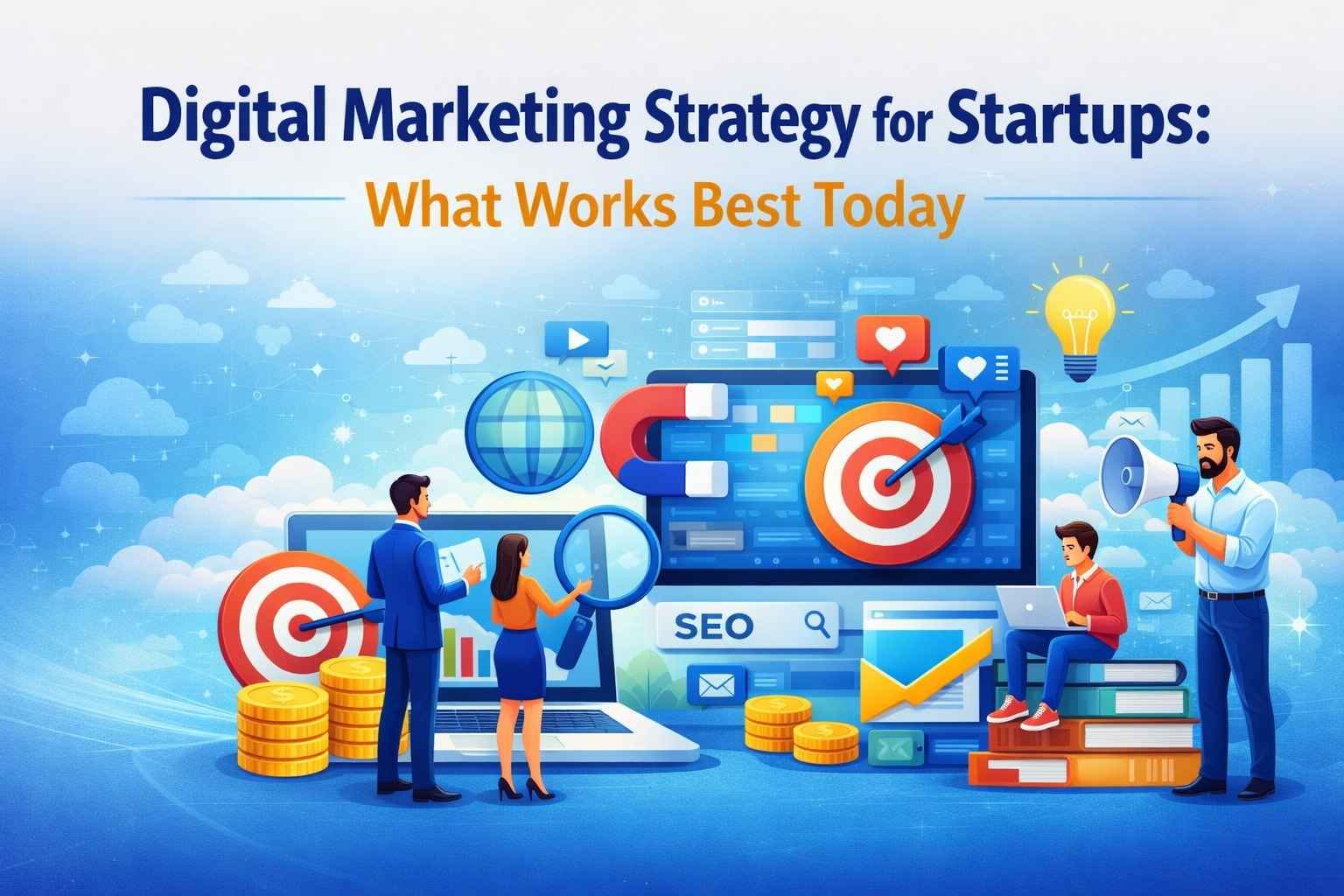

Startups operate in a highly competitive environment where visibility, trust, and customer acquisition are critical for survival and growth. Unlike established businesses, startups often have limited budgets, smaller teams, and less brand recognition. This makes having a focused and effective digital marketing strategy for startups not just important—but essential.
In today’s digital-first world, the right strategy can help startups reach their ideal audience, build credibility, and scale faster without wasting resources. Let’s explore what truly works best for startups today.
Why Digital Marketing Is Essential for Startups
Digital marketing offers startups the flexibility and scalability they need to grow efficiently. Traditional marketing methods are often expensive and difficult to measure, while digital marketing allows startups to track performance, optimize campaigns, and make data-driven decisions.
Key benefits of digital marketing for startups include:
- Cost-effective promotion compared to traditional media
- Precise audience targeting
- Measurable results and ROI
- Faster brand awareness
- Easy scalability as the business grows
A well-planned digital marketing strategy helps startups compete with larger brands on a more level playing field.
1. Set Clear Goals and Understand Your Target Audience
Every successful digital marketing strategy starts with clarity. Startups should clearly define their business goals, such as:
- Increasing website traffic
- Generating qualified leads
- Boosting sales or app downloads
- Building brand awareness
Equally important is understanding the target audience. Startups must identify who their ideal customers are, their challenges, preferences, and online behavior. This ensures that marketing efforts are focused on the right platforms with the right messaging.
2. Create a High-Performance Website
A website is the foundation of any digital marketing strategy. For startups, it acts as the main touchpoint for potential customers. A good startup website should be:
- Mobile-friendly
- Fast-loading
- Easy to navigate
- Designed with clear calls-to-action
User experience and conversion optimization are just as important as design. Visitors should instantly understand what the startup offers and how it solves their problems.
3. Focus on Search Engine Optimization (SEO)
SEO is one of the most powerful long-term digital marketing strategies for startups. While it takes time, it delivers consistent organic traffic without ongoing ad costs.
Startups should focus on:
- Keyword research aligned with user intent
- On-page SEO (titles, meta descriptions, headings)
- High-quality, informative content
- Technical SEO basics like site speed and indexing
By ranking for relevant keywords, startups can attract users who are actively searching for their solutions.
4. Use Content Marketing to Build Trust
Content marketing helps startups establish authority and credibility. Instead of pushing sales messages, startups should create content that educates and solves problems.
Effective content formats include:
- Blog articles
- How-to guides
- Case studies
- Videos and infographics
Consistent, valuable content not only improves SEO but also builds long-term trust with the audience.
5. Choose the Right Social Media Platforms
Being active on every social media platform is not necessary. Startups should focus on platforms where their target audience spends the most time.
For example:
- LinkedIn works well for B2B and SaaS startups
- Instagram and Facebook are effective for consumer-focused startups
- X (Twitter) is popular among tech and startup communities
The key is consistency, engagement, and authentic communication rather than aggressive promotion.
6. Leverage Paid Advertising for Quick Visibility
While organic strategies are essential, paid advertising can help startups gain quick traction. Startups should begin with small budgets and test different campaigns.
Popular options include:
- Google Search Ads for high-intent users
- Social media ads for audience targeting and brand awareness
Landing pages should be optimized to convert visitors into leads or customers, ensuring maximum return on ad spend.
7. Use Email Marketing for Lead Nurturing
Email marketing remains one of the most cost-effective digital marketing channels. For startups, it is ideal for nurturing leads and retaining customers.
Email can be used to:
- Share valuable content
- Announce product updates
- Promote offers and discounts
- Build long-term customer relationships
Personalized and value-driven emails tend to perform significantly better than generic promotional messages.
8. Track Performance and Optimize Continuously
Digital marketing is not a one-time effort. Startups must regularly analyze data to understand what’s working and what isn’t.
Key metrics to track include:
- Website traffic and engagement
- Conversion rates
- Cost per lead or acquisition
- Campaign performance
Using analytics tools allows startups to refine strategies, reduce waste, and scale successful campaigns.
Conclusion
A successful digital marketing strategy for startups is built on focus, consistency, and data-driven decision-making. Rather than trying every available tactic, startups should prioritize strategies that align with their goals, audience, and budget.
By investing in SEO, valuable content, targeted social media, smart advertising, and continuous optimization, startups can build a strong digital presence and achieve sustainable growth in today’s competitive market.
