


The heating and air conditioning industry is one of the most reliable and profitable service sectors today. Homes, offices, schools, and commercial buildings all depend on heating, ventilation, and cooling systems to maintain comfortable indoor environments throughout the year.
Because HVAC systems require installation, maintenance, and occasional repairs, the industry offers multiple opportunities for business owners to generate steady income. Entrepreneurs who understand how to make money in the heating and air conditioning business can build long-term, profitable companies with recurring revenue streams.
From system installations and emergency repairs to maintenance contracts and smart home upgrades, HVAC companies have several ways to increase revenue. This guide explains the best strategies to start, grow, and profit from an HVAC business while understanding HVAC profit margins and typical HVAC company owner salary expectations.
Why the HVAC Business Is So Profitable
The HVAC industry remains profitable because heating and cooling systems are essential in nearly every building. Unlike many industries that depend on trends, HVAC services are required regardless of economic conditions.
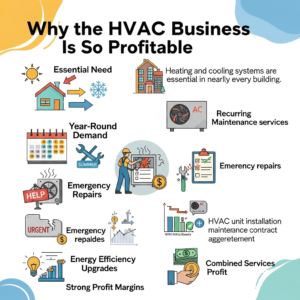
Several factors contribute to the profitability of the HVAC industry:
Year-round demand
Heating and cooling systems are needed in both summer and winter seasons.
Recurring maintenance services
Customers need regular system inspections, cleaning, and performance checks.
Emergency repairs
HVAC breakdowns often require urgent service, allowing businesses to charge premium rates.
Energy efficiency upgrades
Many homeowners and businesses want to reduce energy consumption and lower electricity costs.
Because of these factors, HVAC businesses often operate with strong HVAC profit margins, particularly when they combine installation services with recurring maintenance plans.
The Hidden Factor Behind a Successful HVAC Business
Technical knowledge alone does not guarantee success in the HVAC industry. In residential HVAC services, customer relationships are one of the most important drivers of growth.
Most technicians work inside customers’ homes, which makes professionalism and communication essential. Successful HVAC companies focus on building trust with homeowners.
Important soft skills include:
- Explaining technical issues in simple language
- Being honest about repair and replacement options
- Arriving on time for scheduled appointments
- Maintaining a clean work environment
- Treating customers respectfully
When customers trust a technician, they are far more likely to schedule future maintenance and recommend the company to friends and family. Over time, word-of-mouth referrals become one of the strongest marketing channels for HVAC businesses.
How Much Money Can an HVAC Business Make?
Income potential in the HVAC industry depends on factors such as location, services offered, marketing strategy, and company size.
Typical revenue sources include:
- HVAC system installations
- Repair services
- Maintenance contracts
- Indoor air quality product sales
- Commercial service agreements
Many HVAC businesses operate with profit margins between 10% and 25%, although efficient companies with strong maintenance programs may earn even higher margins.
The HVAC company owner salary varies depending on the business size. Small HVAC company owners may earn between $60,000 and $100,000 per year, while larger companies with multiple technicians can generate significantly higher profits.
The key to maximizing income is creating multiple revenue streams rather than relying only on repair jobs.
8 Best Ways to Make Money in the Heating and Air Conditioning Business
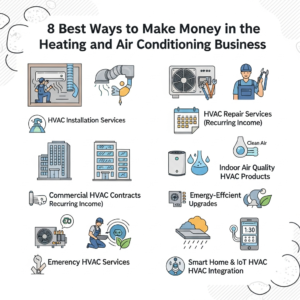
1. HVAC Installation Services
HVAC system installation is one of the most profitable services in the industry. Installing new systems often involves both equipment costs and labor charges, which increases the overall revenue of each project.
Common installation services include:
- Central air conditioning systems
- Furnaces and boilers
- Heat pumps
- Ductwork installation
Pro Tip:
Offer financing options for HVAC installations. Many homeowners cannot pay large upfront costs, but affordable monthly payments can significantly increase conversion rates.
2. HVAC Repair Services
Repair services provide consistent income because HVAC systems eventually experience wear and tear.
Common repair services include:
- Refrigerant leak repairs
- Compressor replacement
- Thermostat troubleshooting
- Electrical component repairs
- Fan motor replacement
During extreme weather conditions, emergency repair services can generate higher profits.
3. HVAC Maintenance Plans (Recurring Income)
Maintenance plans are one of the most reliable ways to build consistent revenue in the HVAC industry.
A typical HVAC maintenance plan may include:
- Seasonal inspections
- Air filter replacement
- Coil cleaning
- System performance testing
- Electrical connection inspection
Pro Tip:
Market maintenance plans as “HVAC system protection” or “equipment longevity insurance.” Customers are more likely to subscribe when they see it as protecting their expensive equipment investment.
4. Commercial HVAC Service Contracts
Commercial buildings require regular HVAC maintenance and monitoring, making them valuable long-term clients.
Potential commercial customers include:
- Office buildings
- Restaurants
- Hotels
- Schools
- Retail stores
Commercial contracts often involve yearly service agreements that provide predictable revenue.
5. Indoor Air Quality Products
Indoor air quality has become increasingly important for homeowners and businesses. HVAC companies can increase profits by offering products that improve indoor air conditions.
Examples include:
- Air purifiers
- Humidifiers
- Dehumidifiers
- Advanced ventilation systems
These products typically offer strong profit margins while improving customer comfort.
6. Energy-Efficient HVAC Upgrades
Energy efficiency upgrades are becoming more popular as customers try to reduce electricity costs.
Examples of upgrades include:
- High-efficiency HVAC systems
- Energy-saving heat pumps
- Smart thermostats
- Advanced insulation and airflow improvements
Energy-efficient solutions not only help customers save money but also create additional revenue opportunities for HVAC companies.
7. Emergency HVAC Services
Emergency HVAC services can be highly profitable because customers need immediate solutions during extreme weather conditions.
Examples include:
- Air conditioner failure during heat waves
- Heating system breakdowns in winter
Pro Tip:
Advertising 24/7 emergency service can significantly increase customer calls during peak seasons.
8. Smart Home and IoT HVAC Integration
Smart home technology is rapidly growing, and HVAC companies can benefit by offering smart system integration services.
Examples include:
- Smart thermostat installation
- Remote temperature monitoring
- Mobile climate control apps
- Energy usage tracking systems
These services position HVAC companies as modern, technology-focused service providers and create additional income streams.
How to Start an HVAC Business
Starting an HVAC business requires planning, training, and proper business setup.
Get HVAC Certifications and Training
Professional HVAC training ensures technicians understand installation procedures, electrical systems, refrigerant handling, and safety standards.
Many regions require HVAC technicians to hold licenses or certifications before operating a business.
Register Your Business
Choose a business structure such as:
- Sole proprietorship
- Partnership
- Limited liability company (LLC)
Register your business name and obtain necessary permits to operate legally.
Purchase Tools and Equipment
HVAC technicians require specialized tools such as:
- Refrigerant gauges
- Vacuum pumps
- Leak detectors
- Electrical diagnostic tools
Investing in quality equipment improves efficiency and service quality.
Get Liability Insurance and Business Protection

Insurance is one of the most important steps when starting an HVAC business.
Most professional HVAC companies carry:
- General liability insurance
- Workers’ compensation insurance
- Commercial vehicle insurance
- Bonding for commercial contracts
Having proper insurance protects the business financially and builds trust with customers who prefer working with licensed and insured contractors.
Build a Strong Online Presence
A professional website and local search visibility are essential for attracting customers.
Important online marketing strategies include:
- Local SEO optimization
- Business directory listings
- Customer reviews
- Social media engagement
These efforts help HVAC companies appear in local search results when customers need services.
How to Grow an HVAC Business

Once your company is established, the next step is scaling operations and increasing revenue.
Strategies for growth include:
Local SEO marketing
Optimize your website and business listings to attract nearby customers searching for HVAC services.
Customer referral programs
Satisfied customers can recommend your services to neighbors and friends.
Maintenance memberships
Recurring service plans generate consistent income.
Commercial contracts
Partnering with property managers and businesses can lead to long-term service agreements.
Online reputation management
Positive reviews significantly increase customer trust and conversion rates.
HVAC Profit Margins Explained
Understanding HVAC profit margins is essential for running a profitable company.
| Service Category | Estimated Profit Margin | Revenue Type |
| Maintenance Plans | 40% – 60% | Recurring |
| Repairs | 30% – 50% | Reactive |
| Installations | 20% – 40% | One-time / High Value |
Maintenance plans often generate the highest margins because they create predictable recurring revenue throughout the year.
HVAC Company Owner Salary
The salary of an HVAC company owner depends on several factors, including company size, service demand, and operating efficiency.
Small HVAC business owners may earn $60,000 to $100,000 per year, while larger companies with multiple technicians can generate significantly higher earnings.
Owners who expand their service areas, hire additional technicians, and build strong customer relationships typically see the highest income growth.
Future Opportunities in the HVAC Industry
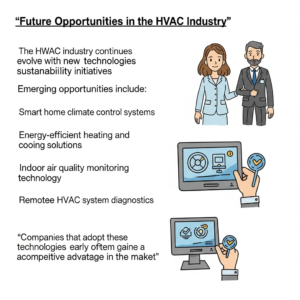
The HVAC industry continues to evolve with new technologies and sustainability initiatives.
Emerging opportunities include:
- Smart home climate control systems
- Energy-efficient heating and cooling solutions
- Indoor air quality monitoring technology
- Remote HVAC system diagnostics
Companies that adopt these technologies early often gain a competitive advantage in the market.
Final Thoughts
The heating and air conditioning industry offers excellent opportunities for entrepreneurs who want to build a profitable service business. By combining installation services, repair work, maintenance plans, and commercial contracts, HVAC companies can generate multiple income streams.
Whether you are learning how to start an HVAC business or exploring ways to grow an HVAC business, focusing on customer trust, recurring maintenance services, and modern technology can lead to long-term success.
With strong HVAC profit margins and increasing demand for energy-efficient systems, the HVAC industry remains one of the most promising service sectors for business owners today.
Frequently Asked Questions (FAQs)
How profitable is a heating and air conditioning business?
A heating and air conditioning business can be highly profitable when managed properly. Many HVAC companies operate with profit margins between 10% and 25%, while services like maintenance plans and repairs can have even higher margins. Businesses that offer installation, maintenance contracts, and emergency services usually generate the most consistent revenue.
How much money can an HVAC company owner make?
The HVAC company owner salary depends on the size of the business and the number of technicians employed. Small HVAC business owners may earn between $60,000 and $100,000 per year, while larger companies with multiple service teams can earn significantly more through installations, maintenance contracts, and commercial projects.
What are the best ways to make money in the HVAC business?
The most profitable HVAC services include:
- HVAC system installations
- Repair services
- Maintenance membership plans
- Commercial HVAC contracts
- Indoor air quality products
- Energy-efficient system upgrades
Offering multiple services helps HVAC businesses create stable and recurring income.
What are typical HVAC profit margins?
Typical HVAC profit margins vary depending on the service type. Maintenance services usually provide the highest margins because they generate recurring revenue, while installation projects produce larger one-time payments.
Average HVAC profit margins include:
- Maintenance services: 40% – 60%
- Repairs: 30% – 50%
- Installations: 20% – 40%
How do I start an HVAC business?
Starting an HVAC business involves several important steps:
- Get professional HVAC training and certifications
- Obtain the required business licenses
- Register your company legally
- Purchase HVAC tools and equipment
- Get liability insurance
- Build a website and online presence
Following these steps helps establish a professional and trustworthy HVAC company.
How can I grow my HVAC business?
To successfully grow an HVAC business, focus on strategies such as:
- Improving local SEO visibility
- Encouraging customer referrals
- Offering annual maintenance plans
- Building strong online reviews
- Targeting commercial clients
These strategies help HVAC companies increase revenue and expand their customer base.
