

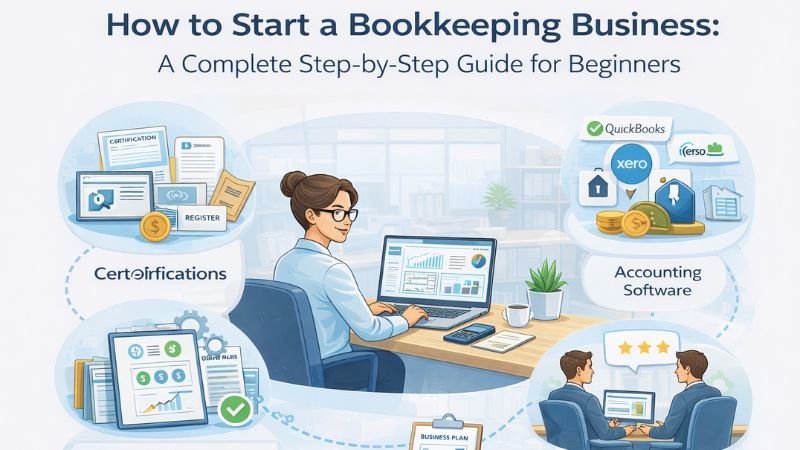

Starting a bookkeeping business can be a highly profitable opportunity for individuals who enjoy working with numbers and helping businesses manage their finances. As more startups and small businesses launch each year, the demand for reliable bookkeeping services continues to grow.
Many companies prefer outsourcing bookkeeping instead of hiring full-time employees, creating strong opportunities for freelancers, remote professionals, and small service agencies.
If you’re wondering how to start a bookkeeping business or even how to start a bookkeeping business from home, this complete guide explains everything you need to know—from required skills and certifications to pricing, client management, and growing a successful bookkeeping business.
What Is a Bookkeeping Business?
A bookkeeping business provides financial record-keeping services for businesses and entrepreneurs. Bookkeepers organize financial transactions, maintain accurate records, and help business owners understand their financial performance.
Typical bookkeeping services include:
- Recording daily financial transactions
- Managing invoices and payments
- Tracking expenses
- Reconciling bank accounts
- Preparing financial reports
- Assisting with payroll processing
Bookkeeping is often confused with accounting, but the two roles are different. Accountants analyze financial information and handle taxes, while bookkeepers focus primarily on maintaining organized financial records.
Because every business needs accurate financial data, bookkeeping services are always in demand.
What Does a Bookkeeper Do? (Daily Responsibilities)
Before you start a bookkeeping business, it’s important to understand the typical tasks bookkeepers perform.
Transaction Recording
Every financial activity—sales, purchases, and expenses—must be recorded properly in accounting software.
Bank Reconciliation
Bookkeepers compare financial records with bank statements to ensure all transactions match.
Invoicing
Many bookkeepers create invoices for clients’ customers and monitor incoming payments.
Payroll Support
Some bookkeepers manage payroll calculations, employee salaries, and tax deductions.
Expense Tracking
Tracking expenses helps business owners understand spending patterns and control costs.
Financial Reporting
Bookkeepers generate reports such as profit-and-loss statements and balance sheets that help business owners make informed financial decisions.
Skills You Need to Start a Bookkeeping Business
To successfully start a bookkeeping business, you need both technical knowledge and business skills.
Attention to Detail
Even small financial mistakes can create serious issues, so accuracy is critical.
Organization
Bookkeepers often manage financial records for multiple clients simultaneously.
Analytical Thinking
You must be able to identify inconsistencies and financial patterns.
Communication Skills
Clients may not understand financial terminology, so you must explain information clearly.
Technical Skills
Modern bookkeeping relies heavily on accounting software such as
QuickBooks,
Xero, and
FreshBooks.
Do You Need Certifications to Start a Bookkeeping Business?
You don’t necessarily need a college degree to start a bookkeeping business, but certifications can increase credibility and help attract higher-paying clients.
Two respected bookkeeping organizations include:
- American Institute of Professional Bookkeepers
- National Association of Certified Public Bookkeepers
These organizations offer certification programs that demonstrate professional knowledge and expertise.
Many successful bookkeepers also complete online accounting courses to strengthen their foundational skills.
Step-by-Step Guide to Starting a Bookkeeping Business
Step 1: Learn Bookkeeping Fundamentals
If you are new to bookkeeping, begin by learning core accounting principles such as:
- Debits and credits
- Financial statements
- Expense tracking
- Cash flow management
Online courses, certifications, and practical exercises can help you build confidence before serving clients.
Step 2: Choose Your Target Market
Selecting a niche helps you position your services and attract the right clients.
Common bookkeeping niches include:
- Small businesses
- Freelancers and consultants
- E-commerce companies
- Real estate businesses
- Startups
Specializing in one niche can make marketing easier and increase trust with potential clients.
Step 3: Create a Business Plan
A simple business plan helps define your strategy and growth goals.
Your bookkeeping business plan should include:
- Target market
- Services offered
- Pricing strategy
- Marketing plan
- Revenue projections
Planning ahead increases your chances of building a sustainable business.
Step 4: Register Your Business
To legally start a bookkeeping business, you must register it according to local regulations.
Common business structures include:
- Sole proprietorship
- Partnership
- Limited Liability Company (LLC)
- Corporation
Each structure has different tax and liability implications, so choose the option that best fits your goals.
Step 5: Set Up Your Office (Home or Remote)
Many professionals prefer to start a bookkeeping business from home because it reduces operating costs.
A typical home office setup requires:
- A reliable computer
- High-speed internet connection
- Accounting software
- Secure cloud storage
- Professional communication tools
Running a remote bookkeeping business allows you to work with clients anywhere.
Data Security: The #1 Priority in Bookkeeping
Bookkeepers handle highly sensitive financial data, which means security must be a top priority.
Protecting client information builds trust and prevents financial risks.
Important security practices include:
- Enable Two-Factor Authentication (2FA) on all financial platforms
- Use encrypted cloud storage like Google Drive or Dropbox
- Store passwords using a password manager such as Bitwarden or LastPass
- Regularly update security software and backup files
Maintaining strict security protocols protects both your clients and your reputation.
Choose the Right Bookkeeping Software
Using professional accounting software increases efficiency and accuracy.
Popular bookkeeping tools include:
- QuickBooks
- Xero
- FreshBooks
These platforms automate tasks such as:
- invoicing
- expense tracking
- financial reporting
- bank reconciliation
Automation saves time and allows you to manage more clients.
Essential Tools Beyond Accounting Software
Running a successful bookkeeping business requires more than accounting tools.
Professional service providers often use additional tools for productivity and communication.
Communication Tools
Platforms like Slack or Microsoft Teams allow quick communication with clients and team members.
Project Management
Tools such as Trello, Asana, or ClickUp help manage deadlines and tasks across multiple clients.
Meeting Scheduling
Scheduling tools like Calendly eliminate the back-and-forth emails when booking meetings.
Using the right tools improves efficiency and client satisfaction.
Professional Client Onboarding
Many beginner bookkeepers run into problems because they start working with clients without clear agreements.
A professional onboarding process ensures smooth collaboration.
Engagement Letter
An engagement letter clearly defines your Scope of Work, outlining exactly what services you provide and what is not included.
This protects both you and the client legally.
Initial Client Questionnaire
Before starting work, ask important questions such as:
- What accounting software are you currently using?
- Are your previous financial records organized?
- Are your previous tax filings complete?
- How many monthly transactions do you process?
This information helps you understand the condition of the client’s financial records.
Managing Scope Creep
Scope creep occurs when clients start requesting additional services beyond the original agreement.
For example, a client might ask for tax consulting or business strategy advice even though they only hired you for bookkeeping.
To manage this effectively:
- Clearly define the scope of services in your contract
- Communicate boundaries professionally
- Charge separately for additional services outside the agreement
Setting clear expectations protects your time and revenue.
Pricing Your Bookkeeping Services
Pricing depends on experience, services, and client complexity.
Common pricing models include:
- Hourly rates
- Monthly service packages
- Project-based pricing
Beginner bookkeepers often charge between $200 and $500 per month per client for basic bookkeeping services.
As your expertise grows, you can increase your pricing accordingly.
How Much Does It Cost to Start a Bookkeeping Business?
One major advantage of bookkeeping is the low startup cost.
|
Expense |
Estimated Cost |
| Accounting software | $20–$70/month |
| Business registration | $50–$300 |
| Website setup | $100–$500 |
| Marketing | $50–$300 |
| Training or certification | $200–$1000 |
Many entrepreneurs successfully start a bookkeeping business from home with less than $1000.
How Much Money Can a Bookkeeping Business Make?
Income depends on your experience, pricing model, and number of clients.
Typical earnings include:
- Beginner bookkeepers: $30–$50 per hour
- Experienced bookkeepers: $60–$100 per hour
- Established bookkeeping businesses: $5,000+ per month
Offering additional services like payroll management or financial consulting can significantly increase revenue.
Transitioning From Bookkeeper to Trusted Financial Advisor
The most successful professionals don’t just record financial data—they provide valuable insights.
Instead of simply entering numbers, consider helping clients understand their finances.
For example, you might say:
“Your expenses increased by 10% this month—should we review where that spending is coming from?”
Providing insights like this transforms you from a basic bookkeeper into a trusted financial partner, allowing you to charge higher rates and build long-term relationships.
Common Mistakes to Avoid When Starting a Bookkeeping Business
Many beginners make avoidable mistakes when launching their business.
Common mistakes include:
- Charging too little for services
- Not choosing a specific niche
- Poor communication with clients
- Ignoring marketing strategies
- Not using professional accounting software
Avoiding these mistakes will help you build a stable and profitable business.
Tips to Grow a Successful Bookkeeping Business
Once you start a bookkeeping business, focus on long-term growth strategies.
Successful bookkeeping businesses often:
- Specialize in a specific industry
- Automate repetitive tasks
- Maintain strong client relationships
- Provide financial insights to clients
Satisfied clients frequently provide referrals, which is one of the most effective ways to grow your business.
Frequently Asked Questions
Can I start a bookkeeping business with no experience?
Yes, but you should learn basic accounting principles through training or certification programs first.
How much should beginner bookkeepers charge?
Many beginners charge between $30 and $50 per hour depending on experience and location.
Can I start a bookkeeping business from home?
Yes. Many professionals successfully start a bookkeeping business from home using accounting software and cloud tools.
Is bookkeeping a profitable business?
Yes. With consistent clients and efficient processes, bookkeeping can generate stable recurring income.
Conclusion
Starting a bookkeeping business is a practical and scalable way to build a service-based company. With increasing demand for financial record-keeping and the ability to work remotely, many entrepreneurs successfully start a bookkeeping business from home and build long-term client relationships.
By learning bookkeeping fundamentals, choosing the right tools, protecting client data, and implementing professional processes, you can successfully start a bookkeeping business and grow it into a sustainable and profitable venture.
With dedication, strong organization skills, and a focus on providing value, your bookkeeping business can become a trusted financial resource for businesses that need reliable support.
