


Starting an HVAC (Heating, Ventilation, and Air Conditioning) business can be a highly profitable and rewarding venture if done the right way. From certifications to hiring the right team, every step matters to establish a successful, sustainable business. This guide walks you through 12 essential steps, complete with explanations, real examples, costs, software recommendations, and actionable tips.
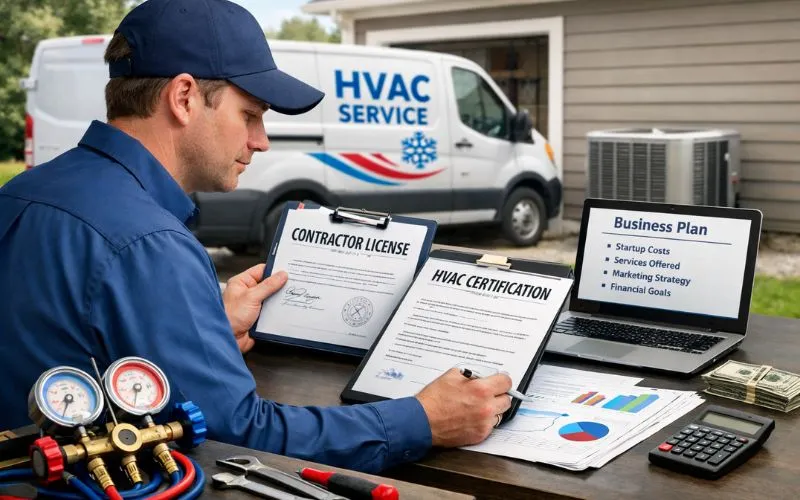
1. Get Your HVAC Certification and Contractor License
Before offering HVAC services, you must earn the necessary certifications and a contractor license (where applicable). This ensures you can operate legally, provide high-quality work, and gain customers’ trust.
Certification:
- United States: EPA certification is required for handling refrigerants. Options include small appliances, low-pressure, high-pressure, or all HVAC equipment.
- Canada: Provincial trade certification is mandatory for refrigeration and AC mechanics.
- UK & Australia: Completion of college courses and apprenticeships is required; in Australia, a Refrigerant Handling Licence is needed from the ARC.
Optional certifications like NATE (North American Technician Excellence) or HVAC Excellence enhance credibility.
Contractor License:
- Proves you can legally operate an HVAC business. Requirements differ by country and often include: apprenticeship experience, passing exams, and insurance verification.
Why it matters: Certified technicians build trust, avoid legal issues, and qualify for bigger commercial projects.
2. Decide on Your HVAC Services
Identify which services your business will provide. Focus on your skills and local market demand. Common services include:
- Furnace repair, maintenance, and installation
- Air conditioning repair, tune-ups, and installation
- Heat pump installation
- Duct cleaning and indoor air quality testing
- Tankless water heater installation
- Energy efficiency upgrades
- Emergency HVAC services
Pro Tip: Specialize in services you enjoy or excel at; this helps differentiate you from competitors and build expertise in a niche.
3. Create an HVAC Business Plan
A business plan is a roadmap that helps you organize your strategy, operations, and financial goals. Key components:
- Executive Summary: Brief overview of business mission, vision, and services
- Business Overview: How and why the business was started
- Management Summary: Your experience, qualifications, and key team members
- Financial Plan: Startup costs, projected revenue, pricing strategy
- Services Offered: List and scope of each service
- Market Research: Competitor analysis, target market insights
- Operational Workflow: Job scheduling, supplier relationships, inventory management
- Marketing Plan: Branding, online presence, advertising, SEO strategies
Why it matters: Banks, investors, and grant providers often require a business plan. It also helps you stay organized as your business grows.
4. Secure Funding for Your HVAC Business
Startup costs for an HVAC business typically range from $5,700 to $15,000+, depending on the equipment and vehicles you need. Common expenses include:
- Basic tools (hammer, screwdrivers, tape measures, drills): $200–$300
- HVAC-specific tools (manifold gauges, leak detectors, refrigerant scales): $400–$700
- Safety equipment (gloves, goggles, boots): $35–$50 per person
- Branded van decals or wraps: $1,500–$5,000
- Software subscriptions (Jobber, QuickBooks, scheduling apps): $3,000+
- Van or truck purchase: $15,000–$40,000
Funding options: Personal savings, bank loans, SBA grants (US), Start Up Loans (UK), or Canada’s Small Business Financing Program.
Pro Tip: Open a separate business bank account to keep personal and business finances separate—this simplifies accounting and taxes.
5. Choose and Register Your Business Name
Pick a professional, easy-to-remember name. Then, register it with local authorities.
Business structures:
- Sole Proprietorship / Sole Trader: Full control, simple setup
- Partnership / Co-op: Two or more owners share responsibilities
- LLC / Corporation / Limited Company: Protects personal assets from business liabilities
Why it matters: Choosing the right structure impacts taxes, legal liability, and long-term growth.
6. Obtain Your Small Business License
Every business must operate legally with the correct license:
- US: Small Business Administration
- Canada: BizPaL
- UK: Licence Finder
- Australia: ABLIS
Licensing ensures compliance, allows you to get a business tax number, and prevents legal issues.
7. Invest in HVAC Business Insurance
HVAC work is risky. Insurance protects your business, employees, and customers. Common policies include:
- General liability insurance
- Workers’ compensation
- Property insurance (office, tools, equipment)
- Commercial auto insurance
- Professional liability insurance
Pro Tip: Proper insurance coverage helps avoid major financial losses from accidents or lawsuits.
8. Set Up Banking and Accounting
Separate business and personal finances. Benefits:
- Clear tracking of revenue and expenses
- Simplified tax filing
- Building business credit
- Real-time cash flow visibility
Software Recommendations:
- QuickBooks Online for bookkeeping and payroll
- Jobber for field service management and syncing invoices with QuickBooks
Why it matters: Organized finances prevent cash flow problems and make growth easier.
9. Buy HVAC Tools and Equipment
Essential tools depend on the services you offer:
Basic tools: Screwdrivers, hammers, wrenches, pliers, drills, gauges
Safety gear: Gloves, boots, goggles, masks
Advanced HVAC tools: Leak detectors, thermal cameras, multimeters, refrigerant scales
Software: Jobber for dispatching, scheduling, and tracking jobs
Pro Tip: Start with essentials, then gradually invest in advanced tools. Typical startup: $200–$300 for basic tools, plus specialized equipment.
10. Set Pricing for Your HVAC Services
Pricing strategies:
- Hourly rate: Good for variable-length jobs
- Flat rate: Predictable cost for customers
- Labor + Materials: Transparent breakdown for clients
Pro Tip: Research local competitors, calculate overhead and markup, and consider optional services to increase revenue. Create a pricing chart for consistent quotes.
Extra Tip: Adrian Garcia (Reliable Kitchen Services) recommends stocking extra parts in vans to cover consumables like gases or cleaners—helps save time and cost.
11. Promote Your HVAC Business
Marketing is key to attracting clients:
- Branding: Logo, uniforms, vehicle graphics
- Online presence: Website, SEO, Google Business Profile, social media
- Advertising: Google Ads, social media campaigns, flyers
- Email marketing: Special offers, referral programs
- Reviews: Encourage Google, Yelp, and Facebook reviews
- CRM tools: Manage leads, client info, and follow-ups
Software Tip: Jobber Marketing Suite helps automate reviews, referrals, and email campaigns.
12. Hire HVAC Technicians
When your workload grows, expand your team. Steps:
- Define roles (technicians, dispatchers)
- Set competitive salaries
- Post job ads on platforms like Indeed
- Screen candidates (interviews, references, background checks)
- Train employees and verify certifications
- Maintain a positive work environment
Why it matters: Skilled technicians allow you to focus on growth while maintaining service quality.
How Profitable is an HVAC Business?
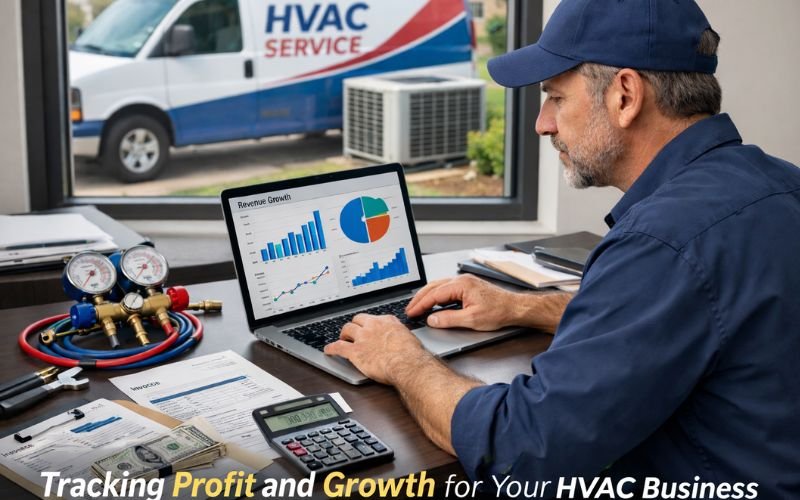
Profit margins usually range 10–20% depending on region and efficiency. Annual revenues for small to mid-sized businesses: $50,000–$500,000+.
Factors affecting profitability:
- Effective pricing and cost management
- Maintenance contracts
- Energy-efficient product sales
- Excellent customer service
Examples:
- Trust Home Comfort: Revenue increased $200k in one year
- VMech Mechanical Contractors: Grew to $1.5M HVAC business from scratch
Common Mistakes to Avoid
- Skipping insurance
- Poor cash flow management
- Underpricing services
- Ignoring estimates or overdue invoices
- Not marketing consistently
- Bad customer service
- Targeting wrong clients
- Failing to highlight unique services (duct sealing, IAQ testing)
Frequently Asked Questions (FAQs)
Q1: What training is needed to start?
A1: HVAC certification and, where required, a contractor license or apprenticeship.
Q2: How much does it cost to start?
A2: Typically $5,000–$15,000+, depending on tools, vehicles, and software.
Q3: How long to start earning?
A3: Usually 3–6 months with consistent marketing.
Q4: Best marketing strategies?
A4: SEO, Google Business, social media, flyers, referrals, email campaigns.
Q5: Why use job management software?
A5: Streamlines scheduling, invoicing, client management, and improves efficiency.
