

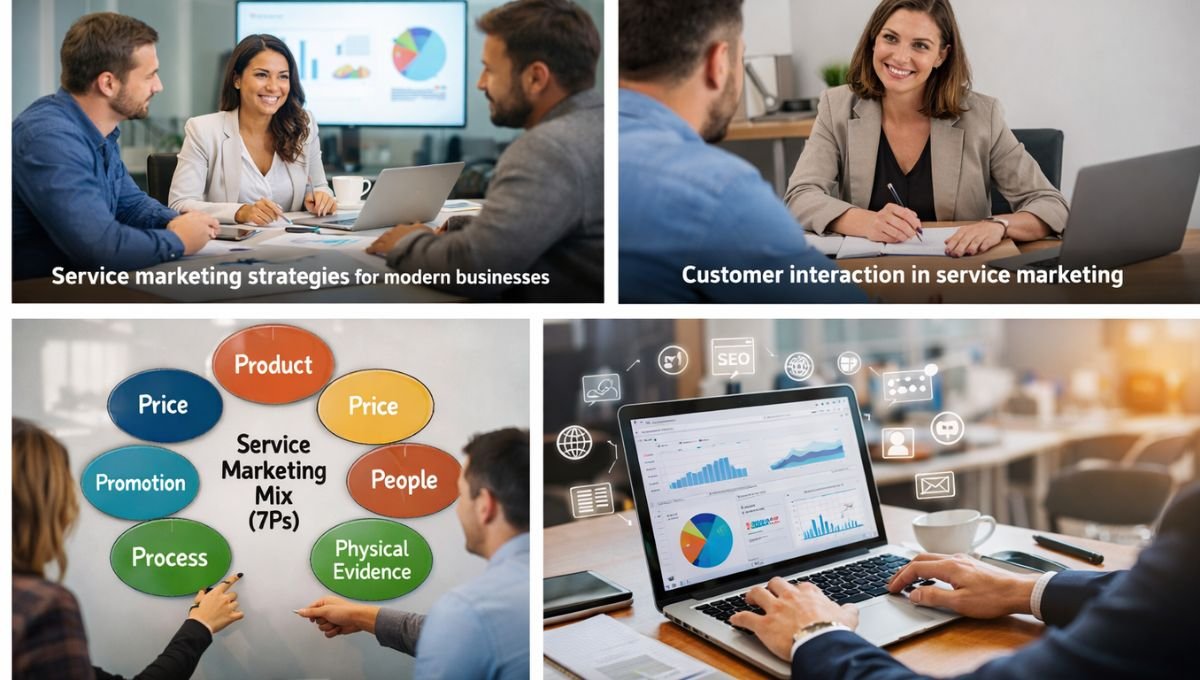

Service marketing has become one of the most important tools for business growth in today’s competitive landscape. Unlike product marketing, which focuses on tangible goods, service marketing highlights intangible offerings, such as customer support, consultations, and personalized experiences. Businesses that master service marketing can attract new clients, retain loyal customers, and create a lasting brand reputation.
In this guide, we’ll cover the definition, importance, key strategies, 7Ps, examples, and challenges of service marketing, ensuring you have everything needed to grow your business in 2026.
What is Service Marketing?
Service marketing is the process of promoting and selling services rather than physical products. It focuses on:
- Intangibility – Services cannot be touched or stored.
- Inseparability – The service is often produced and consumed at the same time.
- Perishability – Services cannot be inventoried; they are time-sensitive.
- Variability – Service quality can vary depending on the provider and situation.
Because services are intangible, businesses rely on trust, credibility, and customer experience to influence purchasing decisions. Companies that invest in service marketing can turn customers into brand advocates and drive long-term growth.
Why Service Marketing is Crucial for Business Success
Service marketing delivers multiple benefits, helping businesses grow sustainably.
1. Build Strong Customer Relationships
Strong relationships are the backbone of any service-based business. Through personalized attention, proactive support, and consistent communication, companies can foster loyalty and trust. For example, a spa offering follow-up calls or personalized treatment recommendations creates a stronger bond with clients, encouraging repeat visits.
2. Create Brand Differentiation
In crowded markets, standing out is essential. Service marketing allows businesses to highlight their unique approach, quality, and added value. A financial consulting firm that offers free webinars, case studies, and personalized plans differentiates itself from competitors that simply advertise generic services.
3. Improve Customer Retention
Acquiring new customers is expensive, making retention critical. Service marketing strategies like loyalty programs, follow-ups, and exclusive offers can keep existing clients engaged. For instance, a digital marketing agency offering quarterly business audits ensures clients remain satisfied and invested.
4. Increase Repeat Business
Satisfied clients are more likely to purchase repeatedly or subscribe to ongoing services. Businesses focusing on consistent, high-quality service create predictable revenue streams. For example, a gym that provides personalized fitness plans and monthly check-ins encourages members to renew subscriptions.
5. Generate Word-of-Mouth Referrals
Positive experiences lead to referrals. Service marketing emphasizes creating memorable customer experiences that clients share with friends, family, or colleagues. Word-of-mouth is powerful because it’s trusted more than advertisements, often resulting in high-quality leads.
Key Strategies for Effective Service Marketing
Here are actionable strategies to enhance your service marketing efforts:
Focus on Customer Experience
Every interaction matters. Make it seamless, personal, and valuable. Collect feedback regularly and improve service delivery based on customer insights.
Leverage Social Proof
Share testimonials, case studies, reviews, and success stories. Businesses that highlight real client results gain credibility and attract new customers.
Emphasize Unique Selling Points (USPs)
Clearly communicate what makes your service unique. Whether it’s faster delivery, premium support, or personalized solutions, highlight these differentiators in all marketing materials.
Apply the 7 Ps of Service Marketing
The traditional marketing mix (7Ps) can be adapted for services:
- Product – The service you offer.
- Price – Competitive and value-based pricing.
- Place – Channels through which the service is delivered.
- Promotion – Advertising, social media, and content marketing.
- People – Staff providing the service and their training.
- Process – How the service is delivered efficiently.
- Physical Evidence – Tangible elements, like brochures or branded spaces, that support service credibility.
Personalize Your Services
Tailor your services to individual customer needs, creating memorable experiences. Personalized emails, custom consultations, or loyalty rewards make clients feel valued and increase retention.
Utilize Technology
Tools like CRM software, chatbots, and marketing automation help track interactions, deliver timely communication, and improve service quality. Tech-driven marketing can streamline processes and enhance customer satisfaction.
Real-World Examples of Service Marketing Success
Hospitality Industry
Hotels offer personalized room preferences, loyalty programs, and 24/7 support, ensuring guests feel valued and return.
IT Services
Tech companies provide fast troubleshooting, maintenance packages, and customer education, building trust and repeat business.
Consulting Firms
Business consultants share case studies, free webinars, and personalized recommendations, positioning themselves as experts while attracting leads.
Fitness & Wellness
Gyms and wellness centers customize workout plans and nutrition advice, keeping members engaged and motivated.
Common Challenges in Service Marketing
Despite its benefits, service marketing comes with challenges:
- Intangibility – Customers cannot see or touch services, making trust harder to build.
- Inconsistent Service Quality – Human involvement can lead to variability.
- High Customer Expectations – Clients often expect exceptional service consistently.
- Measuring ROI – Tracking the direct impact of service marketing on revenue can be difficult.
Overcoming these challenges requires clear processes, staff training, customer feedback, and continuous improvement.
Future of Service Marketing
In 2026 and beyond, digital transformation will drive service marketing. Businesses leveraging AI, automation, and data analytics can deliver personalized experiences at scale. Social media and online reviews will continue to shape brand perception, making reputation management more critical than ever.
Companies that invest in service quality, customer relationships, and technology integration will stay ahead of competitors and enjoy sustainable growth.
Conclusion
Service marketing is essential for any business aiming for long-term success. By focusing on:
- Building strong customer relationships
- Differentiating your brand
- Retaining customers
- Encouraging repeat business
- Generating referrals
…you create a loyal customer base and boost growth. Implementing the strategies outlined in this guide, along with adapting to future trends, ensures your services remain competitive, appealing, and profitable.
