

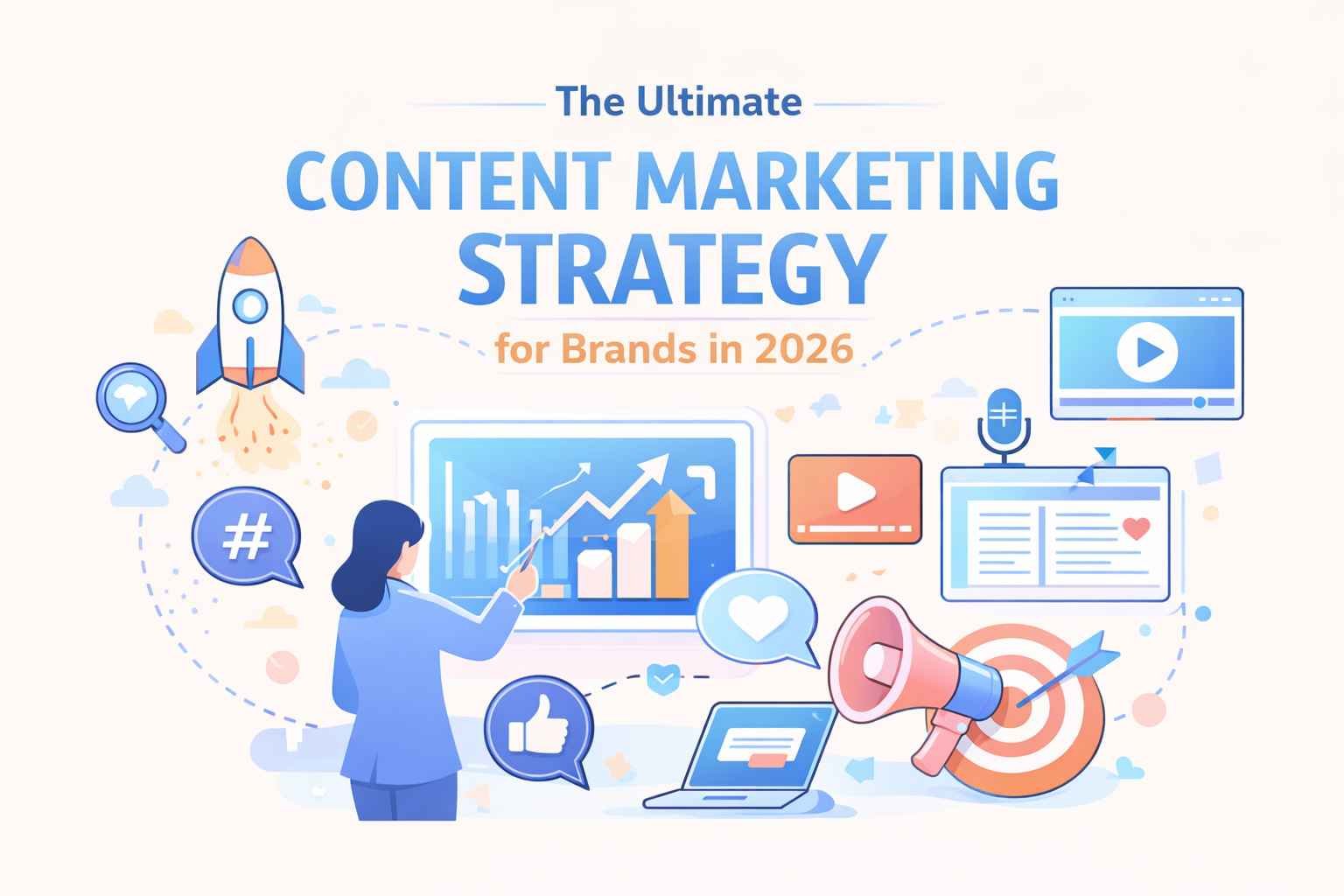

Content marketing has evolved rapidly over the past decade, and by 2026, it’s no longer just about publishing blog posts or posting on social media. Brands are now competing in an attention economy where personalization, authenticity, and data-driven decisions define success. To stay relevant, businesses must adopt a smarter, more adaptive content marketing strategy that aligns with changing consumer behavior and emerging technologies.
This guide breaks down the ultimate content marketing strategy for brands in 2026—what’s changed, what still works, and how to build a system that delivers long-term results.
Understanding the Content Marketing Landscape in 2026
In 2026, audiences expect content that is relevant, valuable, and tailored to their needs. Generic, high-volume content no longer performs well. Search engines and social platforms prioritize quality, engagement, and trust signals over sheer output.
AI-powered tools, voice search, immersive formats, and community-driven platforms are reshaping how content is created and consumed. Brands that succeed are those that balance automation with human creativity and focus on building real relationships rather than chasing vanity metrics.
Setting Clear Goals and KPIs
A successful content marketing strategy starts with clear objectives. In 2026, content goals should align directly with business outcomes, not just traffic.
Common goals include:
- Building brand authority and trust
- Generating high-quality leads
- Nurturing prospects through the buyer journey
- Increasing customer retention and loyalty
Key performance indicators (KPIs) should go beyond page views. Metrics like engagement rate, content-assisted conversions, customer lifetime value, and audience growth quality provide a more accurate picture of performance.
Audience-First and Personalization-Driven Content
Brands in 2026 must deeply understand their audience. This goes beyond basic demographics and focuses on intent, behavior, and preferences.
Use first-party data, CRM insights, and analytics tools to create detailed audience segments. Personalization is no longer optional—it’s expected. From personalized email content to adaptive website experiences, brands should deliver the right message at the right time.
Content that speaks directly to audience pain points builds trust and drives stronger engagement than broad, one-size-fits-all messaging.
High-Quality, Multi-Format Content Creation
The most effective content marketing strategy in 2026 focuses on quality over quantity. Long-form blog posts, in-depth guides, original research, and expert-led content perform exceptionally well when paired with strong storytelling.
At the same time, brands should diversify formats, including:
- Short-form and long-form video
- Podcasts and audio content
- Interactive content such as quizzes and calculators
- Visual content like infographics and carousels
Repurposing content across platforms maximizes reach while maintaining consistency. One high-quality piece can be transformed into multiple formats without diluting its value.
SEO and Search Experience Optimization
SEO remains a core pillar of content marketing in 2026, but it has evolved into search experience optimization. Search engines prioritize content that demonstrates expertise, authority, and trust.
To optimize content effectively:
- Focus on search intent, not just keywords
- Structure content for featured snippets and voice search
- Use clear headings, concise answers, and schema markup
- Keep content fresh with regular updates
The keyword Content Marketing Strategy should be integrated naturally, supporting readability rather than disrupting it.
Distribution and Community Building
Creating great content is only half the job. Distribution plays a critical role in ensuring content reaches the right audience.
Brands should focus on owned channels such as email lists, communities, and websites while strategically leveraging social media and partnerships. In 2026, community-led platforms and private groups are powerful tools for engagement and loyalty.
Encouraging user-generated content, discussions, and feedback transforms content from a broadcast into a conversation.
Leveraging AI Without Losing Authenticity
AI tools help streamline research, content planning, and performance analysis, but authenticity remains essential. Audiences can easily detect overly automated or generic content.
The winning approach is human-led, AI-assisted content creation. Use AI to enhance efficiency, not replace creativity. Thought leadership, original insights, and brand voice must remain human at the core.
Measuring, Testing, and Optimizing Continuously
A modern content marketing strategy is never static. Brands must continuously analyze performance, test new formats, and optimize based on data.
Regular content audits help identify what’s working, what needs improvement, and what should be retired. A culture of experimentation allows brands to adapt quickly to platform changes and audience shifts.
FAQs
What is a content marketing strategy?
A content marketing strategy is a structured plan for creating, distributing, and optimizing content to achieve specific business goals such as brand awareness, lead generation, and customer retention.
Why is content marketing important in 2026?
Content marketing is important because consumers rely on valuable, trustworthy content to make decisions. In 2026, high-quality content helps brands stand out, build authority, and create lasting customer relationships.
How often should brands publish content?
There is no fixed rule. Brands should prioritize consistency and quality over frequency. Publishing fewer, high-impact pieces often delivers better results than frequent low-quality content.
How does AI impact content marketing?
AI improves efficiency by assisting with research, personalization, and performance tracking. However, human creativity and authenticity are still essential for building trust and emotional connection.
How long does it take to see results from a content marketing strategy?
Results typically take three to six months, depending on competition, consistency, and content quality. Content marketing is a long-term investment that compounds over time.
Final Thoughts
The ultimate content marketing strategy for brands in 2026 is built on trust, relevance, and adaptability. By focusing on audience needs, embracing smart technology, and delivering consistent value, brands can create content that not only attracts attention but also drives meaningful business growth.
