



Money influences nearly every part of modern life. People manage their expenses, companies invest in growth, and governments fund public services. All these financial activities are connected through one important concept: finance.
Many students and professionals search online to understand what is finance, especially when exploring career opportunities in the financial industry.
In simple terms, finance is about managing money and making financial decisions that affect individuals, businesses, and economies.
This guide explains:
-
what finance is in simple words
-
the main types of finance
-
companies that work in the finance industry
-
common finance careers
-
average salaries in the United States
-
skills needed for success in finance
By the end of this guide, you will have a clear understanding of how finance works and why it plays such an important role in the global economy.
What Is Finance?
Finance is the study and management of money, including activities such as budgeting, investing, borrowing, saving, and financial planning.
Finance focuses on how individuals, businesses, and governments acquire, allocate, and manage financial resources.
The goal of finance is to ensure that money is used effectively to achieve long-term financial stability and growth.
Finance involves several important activities:
-
budgeting and financial planning
-
investment management
-
lending and borrowing money
-
analyzing financial performance
-
managing financial risks
For example, when a company decides to invest in a new project, finance professionals analyze potential returns and risks before making the decision.
Understanding what finance is helps individuals and organizations make smarter financial decisions and plan for the future.
Why Finance Is Important
Finance plays a critical role in both personal and professional life. Without proper financial management, individuals and organizations may struggle to use their resources efficiently.
Here are some key reasons why finance is important.
1. Helps Manage Money Efficiently
Finance helps people track income, control expenses, and plan budgets. Proper financial management ensures that money is used wisely.
2. Supports Business Growth
Businesses rely on financial planning to invest in new products, hire employees, and expand operations. Companies like Apple Inc. and Amazon depend on strong financial strategies to manage large investments and global operations.
3. Encourages Saving and Investing
Finance helps individuals prepare for major life goals such as buying a home, funding education, or planning retirement.
4. Maintains Economic Stability
Financial systems support economic growth by enabling businesses to raise capital, invest in innovation, and create employment opportunities.
Because of these reasons, finance is considered one of the most essential sectors in the global economy.
The Main Types of Finance

Finance is generally divided into three main categories depending on who manages the financial resources.
Personal Finance
Personal finance focuses on how individuals manage their money.
Common personal finance activities include:
-
creating monthly budgets
-
saving for emergencies
-
managing credit cards and loans
-
planning retirement investments
The goal of personal finance is to maintain financial stability and achieve long-term financial goals.
Corporate Finance
Corporate finance deals with how companies manage their financial resources to support business growth.
Corporate finance professionals help businesses:
-
raise capital from investors
-
manage company assets
-
evaluate new business opportunities
-
control operational costs
Large financial institutions such as Goldman Sachs and JPMorgan Chase provide corporate financial services to businesses worldwide.
Public Finance
Public finance involves how governments manage revenue and spending.
Governments collect revenue primarily through taxes and allocate funds for:
-
healthcare
-
education
-
infrastructure
-
social welfare programs
Public finance helps governments maintain economic stability and promote national development.
What Companies Work in the Finance Industry?
The finance industry includes many organizations that provide financial services to individuals and businesses.
These companies help manage investments, offer financial advice, and support economic activity.
Some common types of finance companies include:
Banking Institutions
Banks manage deposits, loans, and payment systems. Major global banks include JPMorgan Chase and Bank of America.
Investment Firms
Investment firms help individuals and companies invest in stocks, bonds, and financial markets.
Insurance Companies
Insurance companies provide financial protection against risks such as accidents, health issues, or property damage.
Asset Management Companies
These companies manage investment portfolios and funds on behalf of clients.
Financial Advisory Firms
Financial advisors help individuals create financial plans and manage investments.
Together, these organizations form the foundation of the global financial system.
Careers in the Finance Industry
The finance industry offers a wide range of career opportunities for individuals who enjoy working with numbers, financial data, and business strategies.
Finance professionals often analyze financial information, evaluate investment opportunities, and help organizations make strategic financial decisions.
Common finance careers include:
-
financial analyst
-
accountant
-
financial advisor
-
investment banker
-
risk manager
-
portfolio manager
These roles exist in industries such as banking, consulting, technology companies, and government agencies.
Because finance skills are needed in many industries, professionals can work in organizations ranging from startups to global corporations.
Finance Job Roles and Average Salaries in the United States
Finance careers often offer competitive salaries and strong career growth.
Below are some common finance roles and their average salary ranges in the United States.
| Finance Job | Main Responsibility | Average Salary |
|---|---|---|
| Financial Analyst | Analyze financial data and trends | $80,000 – $90,000 |
| Accountant | Prepare financial reports and tax records | $70,000 – $80,000 |
| Financial Advisor | Help clients manage investments | $90,000 – $100,000 |
| Investment Banker | Manage financial transactions | $120,000 – $150,000 |
| Risk Manager | Identify and manage financial risks | $110,000 – $130,000 |
| Portfolio Manager | Manage investment portfolios | $120,000 – $140,000 |
| Chief Financial Officer | Lead company financial strategy | $180,000 – $220,000 |
Salaries vary depending on experience, location, and professional certifications.
Is Finance a Good Career Path?
Finance is widely considered a strong career path because it offers stability, growth opportunities, and high earning potential.
One major advantage of finance careers is consistent demand. Businesses in almost every industry require professionals who can manage financial resources and analyze financial data.
Finance careers also offer clear advancement opportunities. Professionals often begin in entry-level roles and progress into leadership positions such as finance manager or chief financial officer.
Because financial expertise is valuable across industries, finance professionals can work in sectors including technology, healthcare, consulting, and manufacturing.
Skills Needed for a Career in Finance
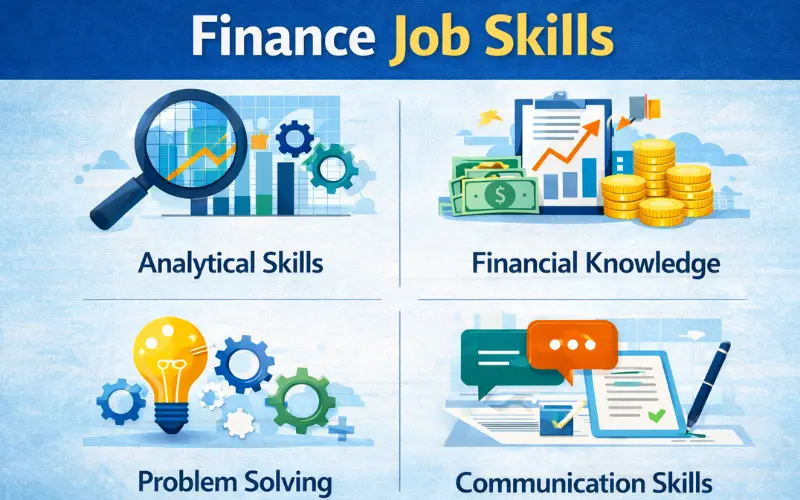
To succeed in finance, professionals need both technical knowledge and practical skills.
Important finance skills include:
Analytical Thinking
Finance professionals must analyze financial data and identify patterns that influence business decisions.
Financial Knowledge
Understanding financial markets, accounting principles, and economic trends is essential.
Communication Skills
Finance professionals often explain complex financial concepts to clients or company leaders.
Problem-Solving Ability
Many financial decisions involve evaluating risks and identifying strategic solutions.
Attention to Detail
Financial reports and data analysis require accuracy and precision.
Developing these skills can significantly improve career opportunities in the finance industry.
Education Required for Finance Careers
Most finance careers begin with a bachelor’s degree in fields such as:
-
finance
-
economics
-
business administration
These programs teach important concepts including financial analysis, investment strategies, and economic principles.
Some professionals also pursue advanced certifications or graduate degrees to improve career prospects and qualify for senior positions.
The Future of the Finance Industry
The finance industry continues to evolve as technology transforms financial services.
Digital banking platforms, online investment tools, and financial technology innovations are changing how financial institutions operate.
Companies are increasingly using data analytics and automation to improve financial decision-making.
Despite technological changes, the demand for skilled finance professionals remains strong because organizations still need experts who can interpret financial information and guide strategic decisions.
Conclusion
Finance plays a vital role in how money is managed by individuals, businesses, and governments. Understanding what finance is helps people make better decisions about saving, investing, budgeting, and planning for the future.
As discussed in this guide, finance includes several key areas such as personal finance, corporate finance, and public finance. Each area focuses on different aspects of managing financial resources but contributes to overall economic stability.
The finance industry also offers a wide range of career opportunities with strong salary potential and long-term growth.
For students and professionals interested in business and economics, finance remains one of the most dynamic and rewarding fields to explore.
Frequently Asked Questions (FAQs)
What is finance in simple words?
Finance is the management of money. It involves activities such as saving, investing, budgeting, borrowing, and planning how money will be used in the future. Understanding what finance is helps individuals and businesses manage their financial resources more effectively.
What are the main types of finance?
Finance is generally divided into three main types: personal finance, corporate finance, and public finance. Personal finance focuses on managing individual money, corporate finance deals with financial decisions within businesses, and public finance involves how governments manage revenue and spending.
Is finance a good career path?
Yes, finance is considered a strong career path because it offers good job opportunities, competitive salaries, and long-term career growth. Many professionals work in roles such as financial analysts, accountants, financial advisors, and investment managers.
What skills are needed for a finance career?
Some important skills for finance careers include analytical thinking, financial knowledge, problem-solving ability, communication skills, and attention to detail. These skills help professionals analyze financial data and make informed decisions.
What do finance jobs pay in the United States?
Finance salaries vary depending on experience and job role. Entry-level positions may start around $70,000 per year, while senior roles such as financial managers or executives can earn more than $150,000 annually.
Why is finance important?
Finance is important because it helps individuals, businesses, and governments manage money efficiently. It supports economic growth, helps people plan their finances, and allows organizations to make strategic financial decisions.
