



The modern trading landscape in 2026 is no longer just about placing buy and sell orders—it’s about data, automation, transparency, and control. Platforms that fail to deliver in these areas are quickly dismissed by informed traders.
SmartyTrade is often presented as a next-generation solution, but to truly understand its value, we need to go beyond surface-level descriptions and examine the technical structure, regulatory clarity, fee transparency, and market depth.
This article provides a refined, critical, and detailed analysis of the platform—addressing common gaps found in typical overviews and giving you a clearer perspective.
What Is SmartyTrade?
SmartyTrade is a multi-asset online trading platform that enables users to trade across forex, cryptocurrencies, stocks, and commodities. It positions itself as a technology-first broker, emphasizing automation and AI-assisted decision-making.
However, calling a platform “smart” in 2026 requires more than branding—it demands clear technical architecture, execution transparency, and measurable performance tools.
How SmartyTrade Actually Works
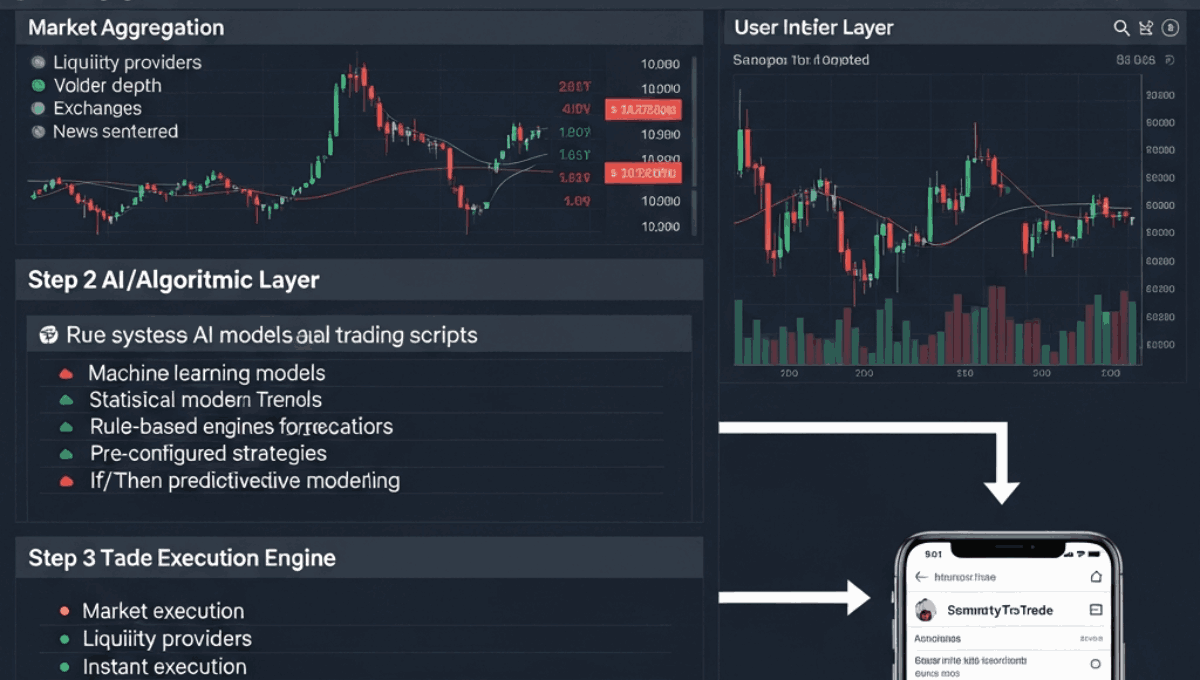
To understand the “smart” aspect, let’s break down a simplified trade execution flow:
Step 1: Data Aggregation
Market data is collected from liquidity providers, exchanges, and pricing feeds. This includes:
- Price ticks
- Order book depth
- Volatility indicators
- News sentiment (if integrated)
Step 2: AI/Algorithmic Layer
This is where SmartyTrade claims differentiation. Typically, platforms may use:
- Machine learning models for pattern recognition
- Statistical models for trend forecasting
- Rule-based engines (If/Then triggers) for automation
The key question:
Are these systems adaptive AI models or simply predefined trading scripts?
Without clear documentation, it’s reasonable to assume most retail platforms—including many competitors—primarily rely on:
- Technical indicators (RSI, MACD, Moving Averages)
- Pre-configured strategies
- Limited predictive modeling
Step 3: Trade Execution Engine
Orders are routed to liquidity providers or internalized (depending on broker model):
- Market execution
- Instant execution
- Slippage handling
Step 4: Risk Management System
Includes:
- Stop-loss / take-profit automation
- Margin monitoring
- Liquidation thresholds
Step 5: User Interface Layer
The trader interacts via charts, dashboards, and mobile apps.
Are SmartyTrade’s “Automated Tools” Truly Advanced?
This is where many platforms overpromise.
In general, automation falls into two categories:
1. Basic Automation (Most Common)
- If price hits X → Buy/Sell
- If RSI > 70 → Sell
- Predefined bot strategies
2. Advanced Automation (Less Common)
- Self-learning algorithms
- Dynamic strategy adaptation
- Portfolio-level optimization
SmartyTrade Review: Strengths and Weaknesses
Strengths
- Clean and beginner-friendly interface
- Multi-asset accessibility in one platform
- Automation features reduce manual effort
- Mobile trading support
- Fast onboarding process
Weaknesses (Critical View)
- Limited public technical documentation
- Unclear depth of AI capabilities
- Regulatory status not prominently defined
- Fee structure not fully transparent upfront
- Unknown liquidity depth for advanced traders
Is SmartyTrade Legit?
One of the most important questions: is smartytrade legit?
In financial markets, legitimacy is not subjective—it is defined by regulation and oversight.
What You Should Look For
A legitimate broker typically has:
- Registration with authorities like:
- SEC (U.S.)
- FCA (UK)
- CySEC (Europe)
- Segregation of client funds
- Transparent legal documentation
- Auditable financial practices
The Concern
If a platform does not clearly state:
- Its regulatory body
- License number
- Jurisdiction
Fee Structure: The Missing Piece in Most Reviews
In 2026, traders expect full fee transparency. Even small hidden costs can significantly impact profitability.
Typical Fees Traders Should Check
| Fee Type | What it Means |
| Spread | Difference between buy/sell price |
| Commission | Charged per trade |
| Withdrawal Fees | Cost to transfer funds out |
| Inactivity Fees | Charged for dormant accounts |
| Overnight Fees | Swap rates for holding positions |
SmartyTrade Insight
While often described as “competitive,” without exact numbers:
- Traders cannot calculate real costs
- Comparisons with other brokers become difficult
Multi-Asset Trading: Depth vs Marketing
SmartyTrade promotes access to multiple markets—but the real question is:
How deep is that access?
What Professional Traders Expect
Forex
- Major, minor, and exotic pairs
- Deep liquidity
- Tight spreads
Crypto
- 50+ trading pairs (not just BTC/ETH)
- High liquidity for altcoins
- 24/7 execution reliability
Stocks
- Global exchange access
- Real shares vs CFDs
Commodities
- Gold, silver, oil, agricultural assets
The Reality Check
If a platform only offers:
- Limited crypto pairs
- Basic forex selection
- CFD-only exposure
Who Should Consider SmartyTrade?
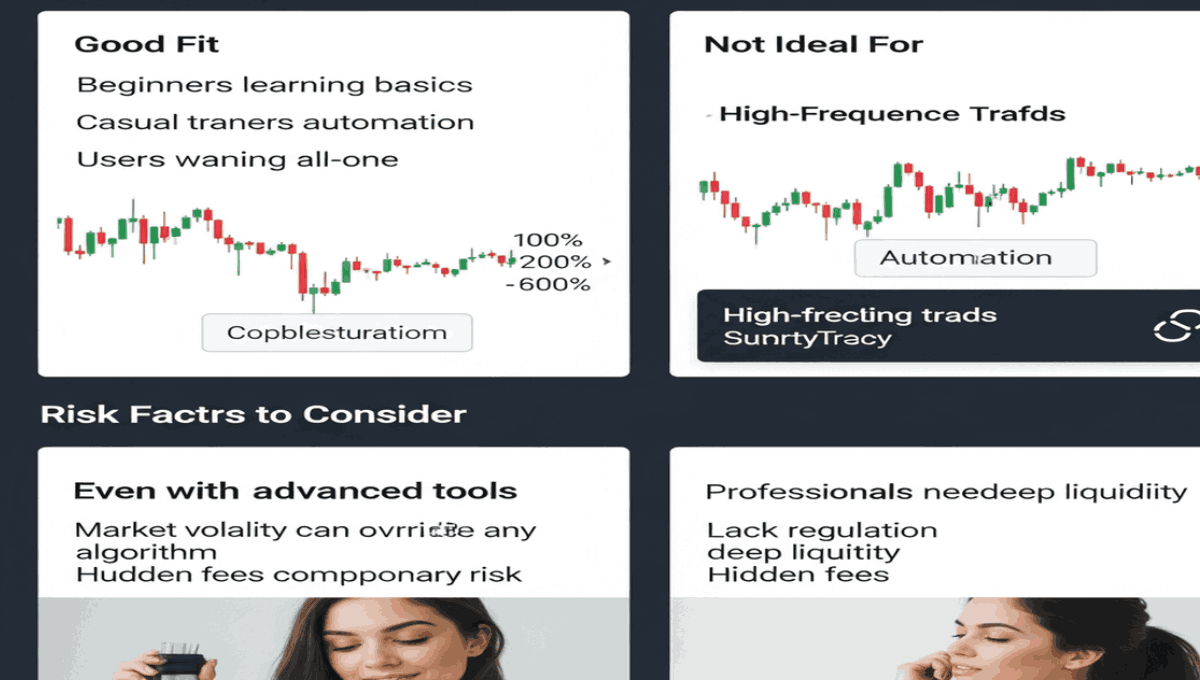
Good Fit
- Beginners learning trading basics
- Casual traders exploring automation
- Users wanting an all-in-one interface
Not Ideal For
- Institutional traders
- High-frequency traders
- Professionals needing deep liquidity and raw spreads
Risk Factors to Consider
Even with advanced tools, risks remain:
- Market volatility can override any algorithm
- Automation can fail in extreme conditions
- Lack of regulation increases counterparty risk
- Hidden fees may reduce profitability
The Future of Platforms Like SmartyTrade
The next evolution of trading platforms will likely include:
- Fully transparent AI models
- Real-time audit trails
- Decentralized trading integrations
- Personalized algorithmic strategies
- Regulatory-tech (RegTech) integration
SmartyTrade is part of this movement—but how far it actually goes depends on execution, not marketing.
Frequently Asked Questions (FAQ)
1. What is SmartyTrade?
SmartyTrade is a multi-asset trading platform offering access to forex, crypto, stocks, and commodities with automation features.
2. Is SmartyTrade legit?
The question “is smartytrade legit” depends on its regulatory status. Always verify licenses and legal compliance before investing.
3. What makes the smartytrade broker different?
It focuses on automation and simplified trading, but its technical depth and transparency should be evaluated carefully.
4. Does SmartyTrade use real AI?
It likely uses a mix of algorithmic trading tools and technical indicators, but full AI transparency is not clearly documented.
5. What fees does SmartyTrade charge?
Exact fees are not always clearly listed. Traders should check spreads, commissions, and withdrawal charges before using the platform.
6. How many assets can I trade?
While multiple asset classes are supported, the actual number of tradable instruments may be limited compared to professional platforms.
7. Is SmartyTrade good for beginners?
Yes, its interface and automation tools make it accessible, but beginners should still learn trading fundamentals.
Final Thoughts
SmartyTrade represents a modern attempt at redefining digital trading platforms, combining accessibility with automation. However, in 2026, traders demand more than convenience—they demand clarity, transparency, and proven performance.
While the smartytrade broker may appeal to beginners and casual traders, more experienced users should approach with a critical mindset—especially regarding regulation, fees, and technical depth.
