

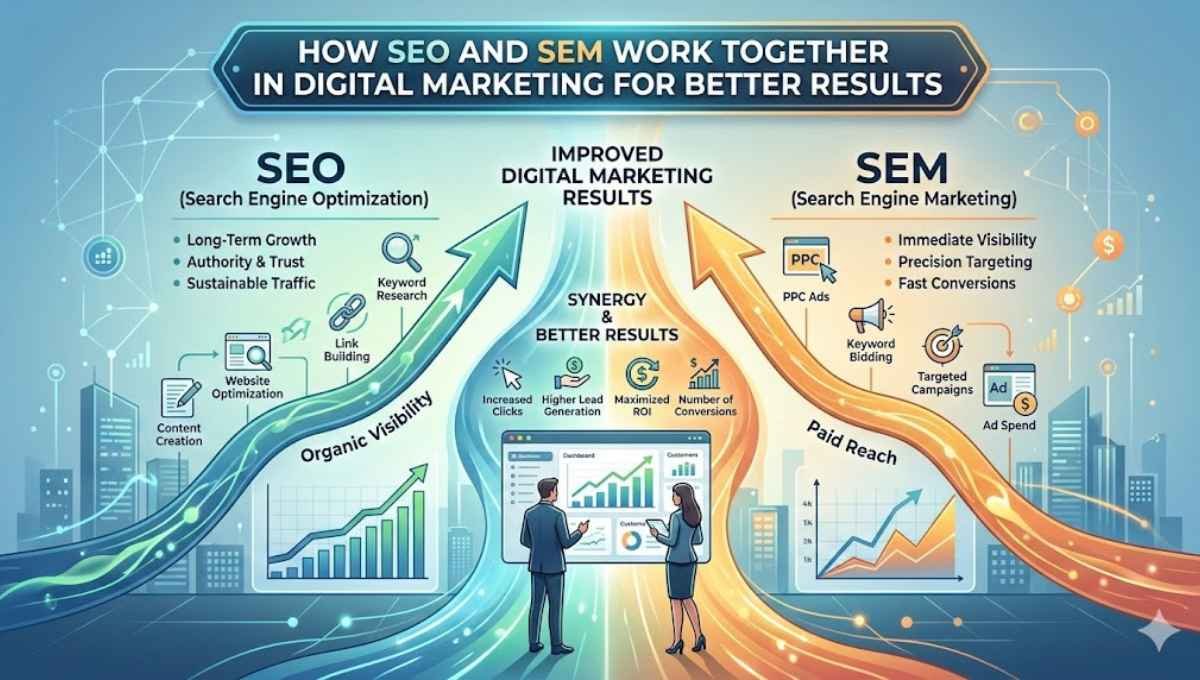

In modern digital marketing, visibility in search engines is one of the most important factors for business growth. Companies invest heavily in SEO (Search Engine Optimization) and SEM (Search Engine Marketing) to attract users who are actively searching for products or services online.
However, many marketers treat SEO and SEM as separate strategies. In reality, the most successful digital marketing campaigns combine both approaches. When SEO and SEM work together, they create a powerful system that improves search visibility, drives qualified traffic, and increases conversions.
This article explains how SEO and SEM complement each other, explores advanced strategies, and addresses common misconceptions businesses should understand before building a combined search strategy.
Understanding SEO in Digital Marketing
Search Engine Optimization (SEO) is the practice of improving a website so it appears higher in organic search results. Unlike paid advertising, SEO focuses on earning visibility naturally through high-quality content, technical optimization, and authority signals.
SEO is often divided into three main categories.
On-Page SEO
On-page SEO focuses on optimizing elements within your website, including:
- Keyword optimization in content
- Title tags and meta descriptions
- Header structure (H1, H2, H3)
- Internal linking
- Image optimization
High-quality, relevant content remains one of the most important ranking factors for search engines.
Technical SEO
Technical SEO ensures that search engines can properly crawl, index, and understand your website.
Key technical SEO factors include:
- Website speed
- Mobile responsiveness
- Secure HTTPS connections
- XML sitemaps
- Structured data markup
Why Structured Data Matters
Structured data helps search engines better understand the content of a page. It uses standardized code (schema markup) to describe information like reviews, products, FAQs, and events.
When implemented correctly, structured data can help pages earn rich snippets in search results, such as:
- Star ratings
- Product prices
- FAQ dropdowns
- Recipe details
These enhanced search results improve visibility and click-through rates, making them valuable for both SEO and SEM strategies.
Off-Page SEO
Off-page SEO refers to activities outside your website that help build authority.
The most important factor is backlinks, which are links from other websites pointing to your content. High-quality backlinks signal to search engines that your website is trustworthy and authoritative.
Understanding SEM in Digital Marketing
Search Engine Marketing (SEM) refers to paid strategies used to gain visibility in search engines. While many people associate SEM only with search ads, modern SEM includes several different advertising formats.
The most common platform for SEM is Google Ads, but the ecosystem includes multiple campaign types.
Search Ads
Search ads appear at the top of search engine results pages when users search for specific keywords.
These ads operate on a pay-per-click (PPC) model, meaning businesses only pay when users click on the ad.
Shopping Ads
Shopping ads are particularly important for e-commerce businesses. They display product images, prices, and brand information directly in search results.
These ads often appear above traditional search ads and can significantly increase product visibility.
Display Advertising
Display ads appear across websites in advertising networks. They are typically image-based and are used for brand awareness or remarketing campaigns.
Remarketing Campaigns
Remarketing allows businesses to show ads to users who previously visited their website but did not convert.
For example:
- A user visits your website from organic search.
- Later, they see targeted ads reminding them about the product they viewed.
This strategy improves conversion rates by re-engaging potential customers.
Local Services Ads
Local Services Ads are designed for local businesses such as plumbers, electricians, or service providers. These ads appear at the top of search results and often include trust signals like verified reviews.
Key Differences Between SEO and SEM
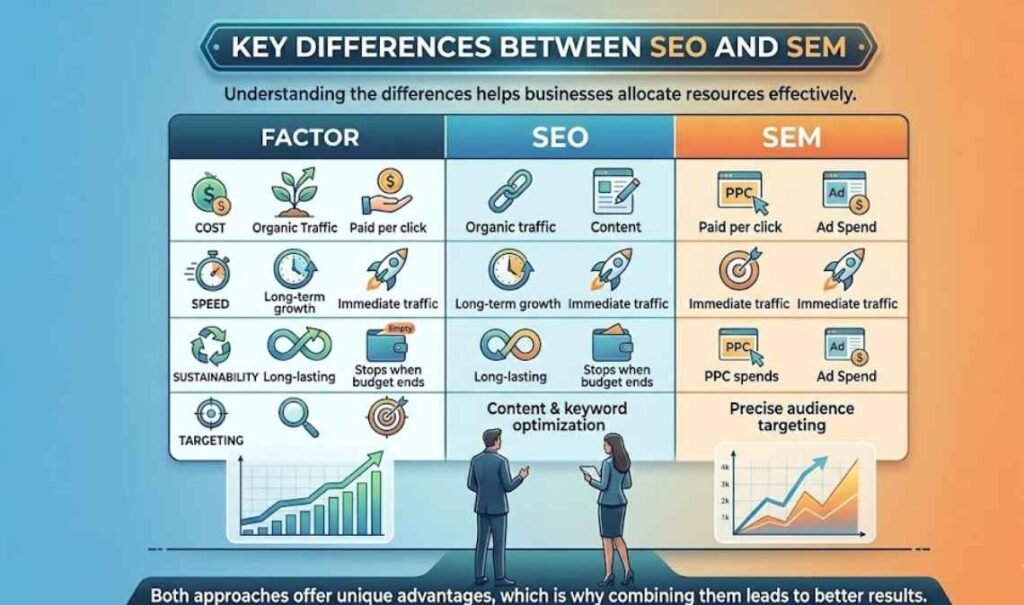
Understanding the differences between SEO and SEM helps businesses allocate resources effectively.
| Factor | SEO | SEM |
| Cost | Organic traffic | Paid per click |
| Speed | Long-term growth | Immediate traffic |
| Sustainability | Long-lasting | Stops when budget ends |
| Targeting | Content & keyword optimization | Precise audience targeting |
Both approaches offer unique advantages, which is why combining them leads to better results.
How SEO and SEM Work Together
Rather than competing strategies, SEO and SEM complement each other in several ways.
1. Dominating Search Results
When a brand appears in both paid ads and organic results, it occupies more space on the search engine results page.
This increases brand credibility and improves the likelihood that users will click on your website.
Multiple search result placements also help businesses compete against large competitors.
2. Faster Data for SEO Strategy
SEM campaigns generate immediate keyword performance data.
Marketers can quickly identify:
- High-converting keywords
- Search intent patterns
- Click-through rates
These insights can then be used to create SEO content targeting the same high-performing keywords.
In other words, SEM acts as a testing ground for SEO.
3. Improved Conversion Optimization
Paid campaigns allow marketers to test different landing pages, headlines, and calls-to-action.
Once a high-performing variation is identified, it can be implemented in SEO pages as well.
This improves user engagement and conversion rates across both strategies.
4. Better Retargeting Opportunities
SEO brings new visitors to your website, but many users do not convert on their first visit.
SEM remarketing campaigns can target those visitors again with tailored ads.
This approach improves conversion rates and maximizes the value of organic traffic.
Avoiding Brand Keyword Cannibalization
One advanced aspect of combining SEO and SEM is managing brand keyword spending.
If your website ranks #1 organically for your brand name, paying for ads on that same keyword may not always be necessary.
For example:
- If users searching your brand already see your site at the top of organic results, additional ads may offer limited value.
- In such cases, businesses may choose to reduce or pause paid ads for those keywords.
However, some companies still bid on their brand keywords to:
- Prevent competitors from bidding on them
- Control messaging in ads
- Promote specific campaigns or offers
A smart strategy evaluates whether brand ads are truly adding value or simply increasing costs.
Tools That Help Combine SEO and SEM
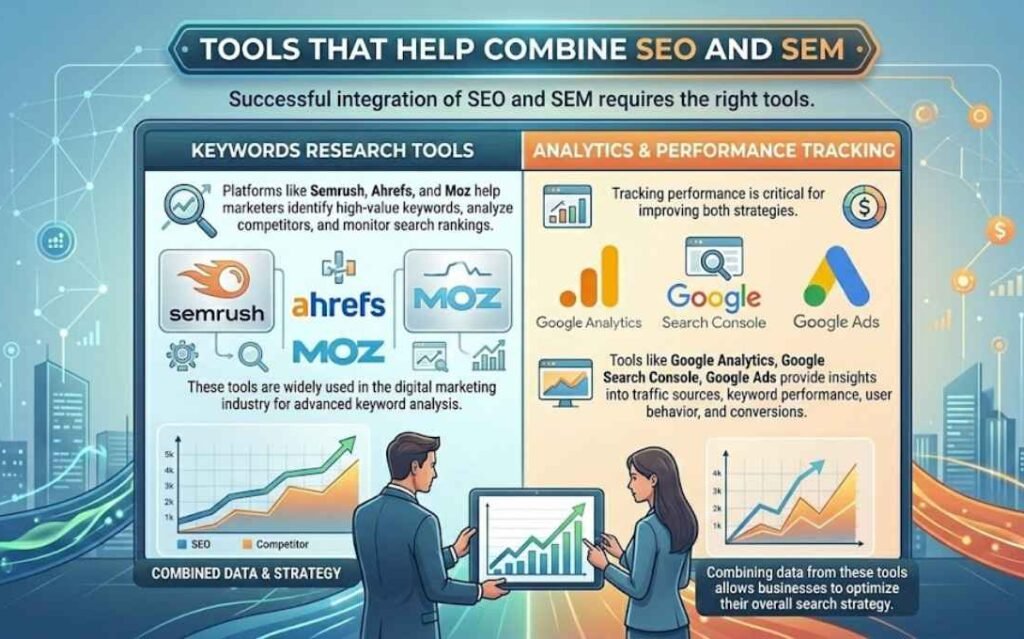
Successful integration of SEO and SEM requires the right tools.
Keyword Research Tools
Platforms like Semrush, Ahrefs, and Moz help marketers identify high-value keywords, analyze competitors, and monitor search rankings.
These tools are widely used in the digital marketing industry for advanced keyword analysis.
Analytics and Performance Tracking
Tracking performance is critical for improving both strategies.
Tools like:
- Google Analytics
- Google Search Console
- Google Ads
provide insights into traffic sources, keyword performance, user behavior, and conversions.
Combining data from these tools allows businesses to optimize their overall search strategy.
Realistic Expectations for SEO Results
Many marketing guides claim SEO results appear within 3–6 months, but this is not always accurate.
The timeline depends on several factors:
- Industry competition
- Website authority
- Content quality
- Backlink profile
- Technical optimization
In competitive industries such as finance, software, or insurance, SEO results can take 12 months or longer.
Businesses should treat SEO as a long-term investment rather than a quick solution.
SEM campaigns can provide traffic during this period while SEO gradually builds organic visibility.
Building a Combined SEO and SEM Strategy
A successful strategy integrates both organic and paid search efforts.
Step 1: Conduct Comprehensive Keyword Research
Identify keywords with different levels of search intent.
These may include:
- Informational keywords (SEO content)
- Transactional keywords (SEM ads)
- Long-tail keywords (less competition)
Using both SEO tools and paid search data improves keyword selection.
Step 2: Optimize Your Website for SEO
Before investing heavily in paid ads, your website should be optimized for search engines and users.
Focus on:
- Fast loading speeds
- Mobile-friendly design
- High-quality content
- Clear site structure
A strong SEO foundation improves the performance of both organic and paid campaigns.
Step 3: Launch Targeted SEM Campaigns
SEM campaigns should focus on high-intent keywords with strong conversion potential.
Campaign types may include:
- Search ads
- Shopping ads
- Display remarketing
- Local services ads
Regular optimization is essential to maximize return on investment.
Step 4: Use SEM Insights to Improve SEO
Paid campaign data can reveal valuable insights about user behavior.
For example:
- Which keywords convert best
- Which ad copy generates clicks
- Which landing pages perform well
This data can guide SEO content creation and optimization
Step 5: Continuously Analyze and Improve
Search marketing requires ongoing optimization.
Regularly monitor performance using analytics tools to evaluate:
- Traffic growth
- Keyword rankings
- Conversion rates
- Advertising ROI
Adjust strategies based on data rather than assumptions.
Frequently Asked Questions (FAQ)
1. What is the main difference between SEO and SEM?
SEO focuses on improving organic search rankings, while SEM involves paid advertising to appear in search engine results.
2. Can SEO and SEM be used together?
Yes. Combining SEO and SEM improves visibility, provides keyword insights, and increases overall marketing performance.
3. How long does SEO take to show results?
SEO timelines vary widely. In low-competition niches results may appear within a few months, but in competitive industries it can take 12 months or more.
4. Is SEM only about search ads?
No. SEM includes several campaign types such as search ads, shopping ads, display advertising, remarketing campaigns, and local services ads.
5. What tools are best for SEO and SEM research?
Popular tools include Semrush, Ahrefs, and Moz for keyword research and competitor analysis, along with Google Analytics and Google Search Console for performance tracking.
Conclusion
SEO and SEM are two of the most powerful strategies in digital marketing. While SEO builds long-term organic visibility, SEM provides immediate traffic and valuable performance data.
When used together, these strategies create a comprehensive search marketing system that maximizes visibility, improves targeting, and increases conversions.
Businesses that integrate both approaches—while using data, advanced tools, and realistic expectations—are far more likely to succeed in today’s competitive search landscape.
