



Social media has transformed the way businesses connect with customers. What started as a platform for personal communication has evolved into one of the most powerful marketing channels available today. Whether you run a small local business, an eCommerce store, or a global enterprise, social media marketing can help you build brand awareness, engage your audience, generate leads, and increase sales.
With billions of people actively using social media platforms every day, businesses can no longer afford to ignore these channels. Effective social media marketing allows brands to reach potential customers where they spend a significant amount of their time online.
In this comprehensive guide, you’ll learn what social media marketing is, why it matters, how it works, its key benefits, the best platforms to use, proven strategies, common mistakes to avoid, and future trends shaping the industry.
What Is Social Media Marketing?
Social Media Marketing Definition
Social media marketing (SMM) is the process of using social media platforms to promote products, services, or brands, engage with audiences, build relationships, and achieve business goals.
Businesses use platforms such as Facebook, Instagram, LinkedIn, TikTok, YouTube, Pinterest, and X (formerly Twitter) to share content, communicate with customers, run advertising campaigns, and measure marketing performance.
Unlike traditional advertising, social media marketing enables two-way communication between businesses and consumers, creating opportunities for direct engagement and meaningful interactions.
How It Differs from Traditional Marketing
Traditional marketing relies on channels such as television, radio, print media, and billboards. These methods typically involve one-way communication, where businesses broadcast messages to audiences without immediate feedback.
Social media marketing offers:
- Real-time communication
- Audience interaction and engagement
- Precise targeting options
- Measurable results
- Lower advertising costs
- Faster campaign optimization
This shift from one-way broadcasting to interactive communication is one of the main reasons social media marketing has become essential for modern businesses.
Why Social Media Marketing Matters
Growing Social Media Users
The number of social media users continues to grow globally. Consumers spend several hours each day browsing social platforms, making social media one of the most effective channels for reaching potential customers.
Changes in Consumer Behavior
Today’s consumers use social media to:
- Discover new products and brands
- Read reviews and recommendations
- Research companies before making purchases
- Engage directly with businesses
- Seek customer support
As consumer behavior continues to evolve, businesses must establish a strong social media presence to remain competitive.
Quick Definition
Social media marketing (SMM) is the process of using social media platforms such as Facebook, Instagram, LinkedIn, X, and TikTok to promote products, build brand awareness, engage audiences, and drive business growth.
How Social Media Marketing Works
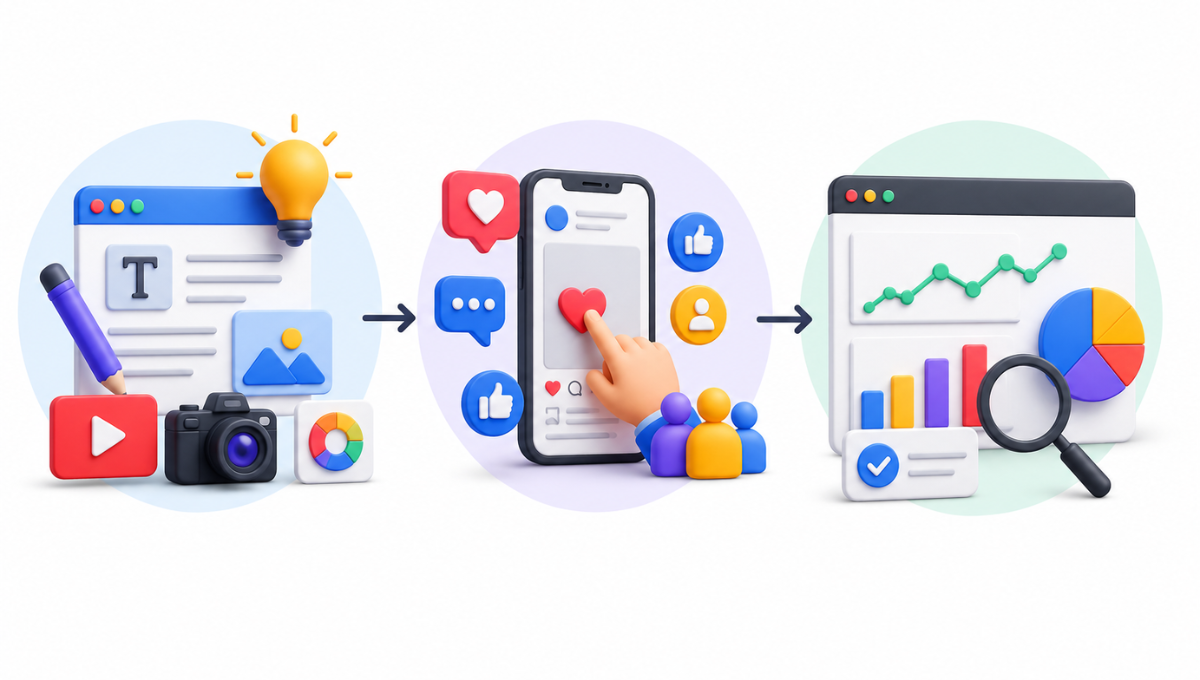
Successful social media marketing combines several important components.
Content Creation
Content is the foundation of every social media marketing strategy.
Popular content formats include:
- Images
- Videos
- Reels
- Stories
- Infographics
- Live streams
- Blog promotions
- User-generated content
High-quality content educates, entertains, and inspires audiences while encouraging engagement.
Audience Engagement
Social media is not just about publishing content. It is equally important to interact with your audience.
Engagement activities include:
- Responding to comments
- Answering direct messages
- Conducting polls and surveys
- Hosting live sessions
- Encouraging discussions
Brands that actively engage with their followers often build stronger customer relationships and loyalty.
Paid Advertising
Most social media platforms offer sophisticated advertising solutions.
Advertising enables businesses to:
- Reach specific demographics
- Increase website traffic
- Generate leads
- Drive sales
- Promote products and services
Platforms owned by Meta Platforms, as well as LinkedIn, TikTok, and YouTube, provide advanced targeting capabilities that help businesses maximize advertising effectiveness.
Performance Tracking
One of the biggest advantages of social media marketing is measurable performance.
Businesses can track metrics such as:
- Reach
- Impressions
- Engagement rate
- Click-through rate
- Conversions
- Revenue generated
Performance data helps marketers refine strategies and improve campaign results over time.
Key Benefits of Social Media Marketing
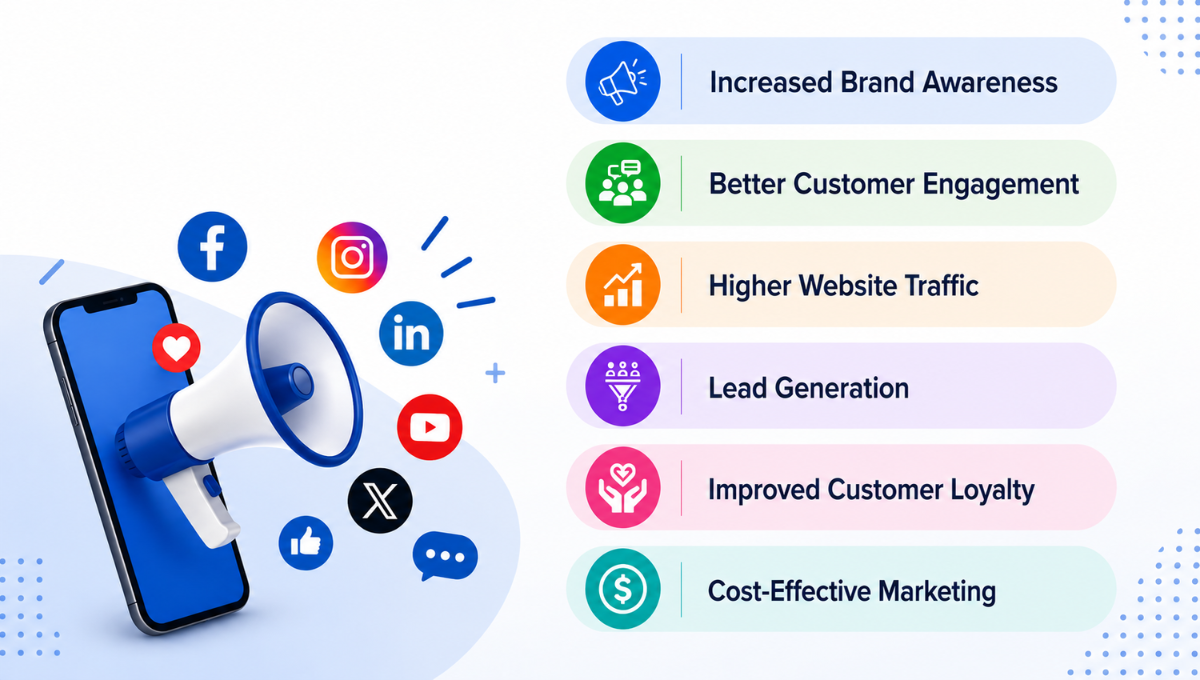
Increased Brand Awareness
Social media allows businesses to reach large audiences quickly and efficiently.
Consistent posting and engagement can significantly improve brand visibility and recognition, helping potential customers become familiar with your products and services.
Better Customer Engagement
Unlike traditional marketing channels, social media enables direct conversations with customers.
Benefits include:
- Faster communication
- Improved customer support
- Stronger relationships
- Enhanced trust
Engaged customers are more likely to remain loyal and recommend brands to others.
Higher Website Traffic
Social media platforms serve as powerful traffic-generation channels.
By sharing valuable content and linking to your website, businesses can attract qualified visitors interested in learning more about their products or services.
Lead Generation
Social media marketing can generate high-quality leads through:
- Lead generation ads
- Landing pages
- Content offers
- Webinars
- Newsletter signups
Many businesses use social media as a primary source of new customer acquisition.
Improved Customer Loyalty
Regular communication and meaningful engagement help businesses build long-term relationships with customers.
Loyal customers often become brand advocates who recommend products and services to friends, family, and colleagues.
Cost-Effective Marketing
Compared to traditional advertising channels, social media marketing offers exceptional value.
Businesses can start with minimal budgets and gradually scale their efforts as they see positive results.
Major Benefits of Social Media Marketing
| Benefit | Impact on Business |
| Brand Awareness | Greater visibility and recognition |
| Engagement | Stronger customer relationships |
| Lead Generation | More potential customers |
| Website Traffic | Increased visitor numbers |
| Customer Loyalty | Higher retention rates |
| Sales Growth | Increased revenue opportunities |
Types of Social Media Marketing
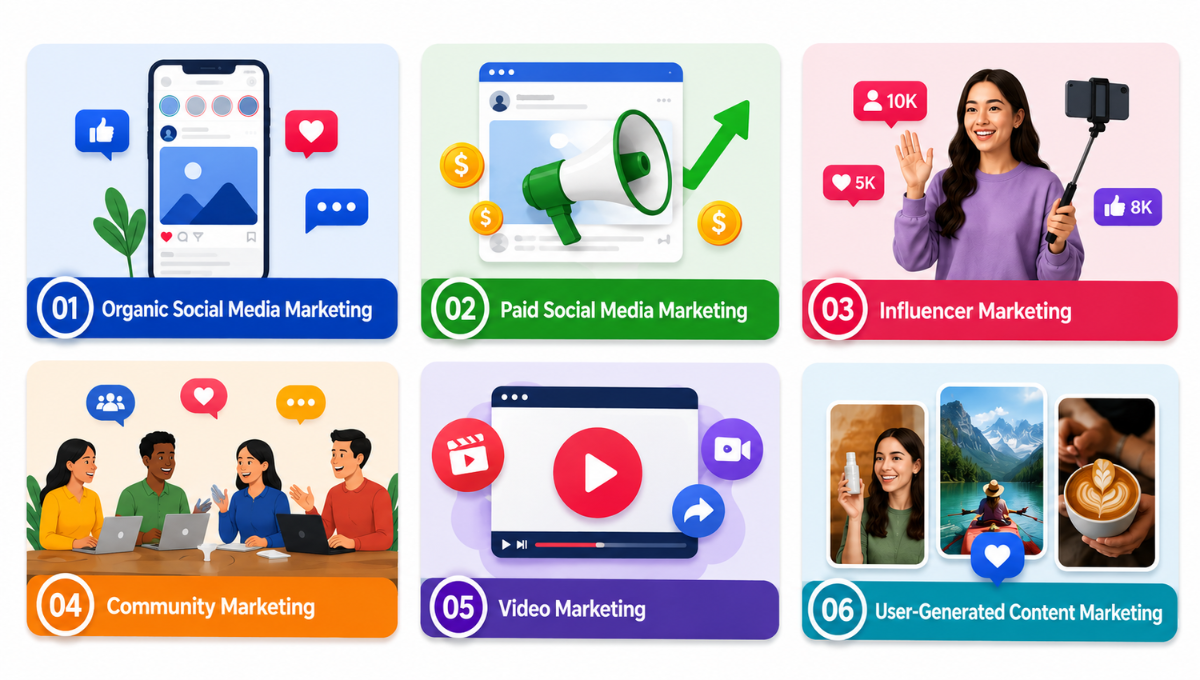
Organic Social Media Marketing
Organic marketing refers to unpaid activities performed on social platforms.
Examples include:
- Posting content
- Responding to comments
- Building communities
- Growing followers naturally
Organic marketing focuses on long-term relationship building and audience trust.
Paid Social Media Marketing
Paid social media marketing involves running advertisements to reach larger audiences.
Benefits include:
- Faster results
- Greater reach
- Advanced targeting
- Improved lead generation
Influencer Marketing
Influencer marketing involves partnering with individuals who have established audiences and credibility.
Influencers help brands:
- Expand reach
- Build trust
- Increase engagement
- Improve conversions
Community Marketing
Community marketing focuses on creating and nurturing online communities around a brand.
Examples include:
- Facebook Groups
- LinkedIn Communities
- Online forums
- Private customer groups
Strong communities often drive higher loyalty and advocacy.
Video Marketing
Video content continues to dominate social media.
Popular video formats include:
- Product demonstrations
- Tutorials
- Behind-the-scenes content
- Customer testimonials
- Live broadcasts
Video typically generates higher engagement than most other content formats.
User-Generated Content Marketing
User-generated content (UGC) consists of content created by customers rather than brands.
Examples include:
- Reviews
- Testimonials
- Photos
- Videos
- Social media mentions
UGC often increases trust because it comes from real customers.
Best Social Media Platforms for Marketing
Facebook Marketing
Facebook remains one of the largest social networks and offers extensive advertising capabilities.
Best for:
- Local businesses
- eCommerce brands
- Community building
- Lead generation
Instagram Marketing
Instagram focuses on visual storytelling and brand aesthetics.
Best for:
- Fashion brands
- Beauty companies
- Travel businesses
- Lifestyle brands
LinkedIn Marketing
LinkedIn is the leading professional networking platform.
Best for:
- B2B companies
- SaaS businesses
- Consultants
- Professional services
TikTok Marketing
TikTok specializes in short-form video content and viral trends.
Best for:
- Consumer brands
- Younger audiences
- Entertainment-focused content
X (Twitter) Marketing
X enables real-time conversations and trending discussions.
Best for:
- Technology companies
- Media organizations
- Public engagement
YouTube Marketing
YouTube is the world’s largest video-sharing platform and an important search engine after Google.
Best for:
- Educational content
- Tutorials
- Product demonstrations
- Long-form videos
Pinterest Marketing
Pinterest serves as a visual discovery platform.
Best for:
- Home décor
- Fashion
- Food
- DIY projects
Social Media Platforms Comparison
| Platform | Best For | Business Type |
| Advertising | B2C | |
| Visual Branding | Fashion, Lifestyle | |
| Professional Networking | B2B | |
| TikTok | Short Videos | Consumer Brands |
| YouTube | Long-Form Content | Almost All Industries |
How to Create a Social Media Marketing Strategy
Define Clear Goals
Every successful strategy begins with clearly defined objectives.
Examples include:
- Increasing followers
- Growing website traffic
- Generating leads
- Boosting sales
- Improving customer engagement
Goals should be measurable and aligned with overall business objectives.
Identify Your Target Audience
Understanding your audience is essential.
Research factors such as:
- Age
- Gender
- Location
- Interests
- Online behavior
- Purchasing habits
The better you understand your audience, the more effective your content and campaigns will be.
Choose the Right Platforms
Not every platform is suitable for every business.
Focus on the platforms where your target audience is most active.
Develop a Content Plan
A balanced content strategy typically includes:
- Educational content
- Entertaining content
- Promotional content
- Industry insights
- Customer stories
Diversified content helps maintain audience interest.
Create a Posting Schedule
Consistency is critical for social media success.
Using a content calendar helps ensure:
- Regular posting
- Better planning
- Improved engagement
- Efficient content management
Measure Results and Optimize
Regular analysis helps improve performance.
Review metrics frequently and adjust strategies based on data and audience feedback.
Businesses should also incorporate risk management strategies to identify potential challenges, reduce campaign risks, and make more informed marketing decisions.
Social Media Marketing Best Practices
Maintain Brand Consistency
Ensure consistent:
- Brand voice
- Visual identity
- Messaging
- Tone
Consistency strengthens brand recognition and trust.
Focus on Quality Content
High-quality content delivers value and encourages engagement.
Prioritize relevance, usefulness, and authenticity over quantity.
Engage With Followers
Respond promptly to:
- Comments
- Questions
- Reviews
- Direct messages
Active engagement improves customer satisfaction.
Use Analytics Tools
Analytics tools provide insights into audience behavior and campaign performance.
Use data to identify what works and improve future content.
Stay Updated With Trends
Social media evolves rapidly.
Monitor:
- Platform updates
- Algorithm changes
- Emerging content formats
- Industry trends
Businesses that adapt quickly often gain a competitive advantage.
Common Social Media Marketing Mistakes to Avoid
Posting Without a Strategy
Random posting often leads to inconsistent results and wasted effort.
Always develop a clear plan before publishing content.
Ignoring Audience Engagement
Failing to respond to customers can damage relationships and reduce trust.
Over-Promoting Products
Constant sales-focused content can drive audiences away.
A good rule is to provide value first and promote products strategically.
Inconsistent Posting
Irregular activity can reduce visibility and audience engagement.
Consistency is essential for long-term growth.
Not Tracking Performance
Without measurement, businesses cannot identify what works or improve results.
Analytics should be an ongoing part of every strategy.
Real-World Examples of Successful Social Media Marketing
Example 1: Brand Awareness Campaign
A new apparel brand launches a series of creative Instagram Reels and collaborates with micro-influencers. The campaign gains significant engagement, increases follower growth, and expands brand visibility.
Example 2: Influencer Collaboration
A skincare company partners with trusted beauty influencers who share authentic product reviews. The collaboration boosts trust and drives substantial sales growth.
Example 3: User-Generated Content Campaign
A brand encourages customers to share photos using a branded hashtag. Thousands of user submissions increase engagement and provide valuable social proof.
Social Media Marketing Tools
Content Scheduling Tools
Popular tools include:
- Buffer
- Hootsuite
- Later
These platforms help businesses schedule content and manage multiple social accounts efficiently.
Analytics Tools
Useful analytics solutions include:
- Google Analytics
- Native platform insights
- Third-party reporting tools
These tools help measure ROI and optimize campaigns.
Social Listening Tools
Social listening tools monitor:
- Brand mentions
- Customer sentiment
- Industry conversations
- Competitor activity
They help businesses understand public perception and emerging trends.
Design Tools
Popular design tools include:
- Canva
- Adobe Express
These tools simplify the creation of professional social media graphics and visual content.
The Future of Social Media Marketing
AI-Powered Content Creation
Artificial intelligence is transforming content creation by helping marketers generate ideas, create visuals, write captions, and optimize campaigns more efficiently.
Social Commerce
Social commerce allows consumers to discover and purchase products directly within social platforms.
This trend is expected to continue growing as shopping experiences become more seamless.
Personalized Marketing
Advanced data analytics and AI enable highly personalized customer experiences, improving engagement and conversion rates.
Short-Form Video Dominance
Short-form videos continue to dominate user attention.
Formats such as Reels, Shorts, and TikTok videos are expected to remain among the most effective content types for marketers.
Frequently Asked Questions
What is social media marketing?
Social media marketing is the use of social media platforms to promote products, engage audiences, increase brand awareness, and achieve business goals.
Why is social media marketing important?
It helps businesses reach large audiences, build relationships, generate leads, drive traffic, and increase sales cost-effectively.
Which social media platform is best for businesses?
The best platform depends on your audience and goals. LinkedIn is often ideal for B2B companies, while Facebook and Instagram work well for many B2C businesses.
How much does social media marketing cost?
Costs vary depending on content creation, advertising budgets, tools, and business objectives. Organic marketing can start with little to no investment.
Is social media marketing suitable for small businesses?
Yes. Social media marketing is one of the most affordable and effective ways for small businesses to attract customers and build brand awareness.
What are the main types of social media marketing?
The primary types include organic marketing, paid advertising, influencer marketing, community marketing, video marketing, and user-generated content marketing.
Conclusion
Social media marketing has become an essential component of modern digital marketing. It provides businesses with powerful opportunities to increase brand awareness, engage customers, generate leads, and drive revenue growth.
Success in social media marketing requires more than simply posting content. Businesses must develop clear goals, understand their audience, create valuable content, engage consistently, and use analytics to optimize performance.
As technologies such as artificial intelligence, social commerce, and personalized marketing continue to evolve, social media will remain a critical channel for business growth. Organizations that adopt a strategic and customer-focused approach to social media marketing will be best positioned for long-term success in an increasingly digital world.
