

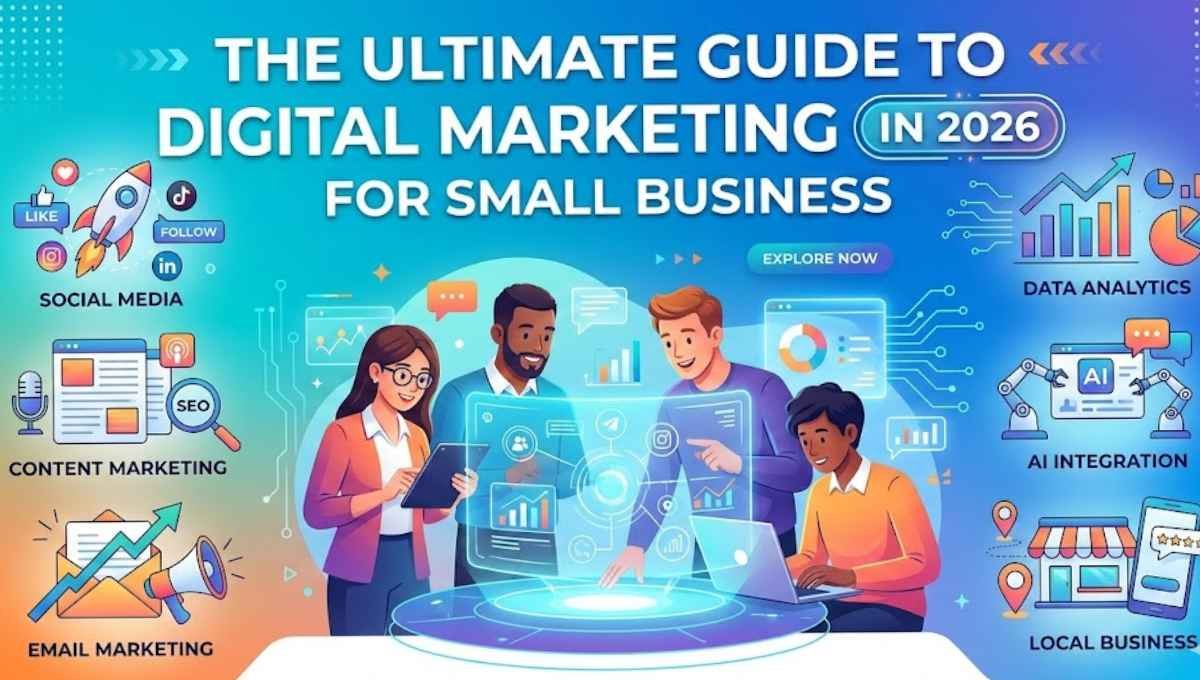

Digital marketing has become one of the most important growth tools for small businesses. In 2026, customers rely heavily on the internet to discover products, compare services, read reviews, and make purchasing decisions. Because of this shift in consumer behavior, businesses that invest in a strong digital presence have a significant advantage over competitors who rely only on traditional marketing methods.
For small business owners, digital marketing offers the opportunity to reach a wider audience, build strong relationships with customers, and grow revenue without needing the large budgets that big corporations often spend on advertising. The key is understanding the right strategies and implementing them consistently.
What Is Digital Marketing for Small Business?
Digital marketing for small business refers to promoting products or services using online platforms and digital technologies. These platforms include search engines, websites, social media networks, email campaigns, online advertisements, and video platforms.
Unlike traditional marketing channels such as print advertisements or billboards, digital marketing allows businesses to target specific audiences, measure results accurately, and adjust campaigns in real time.
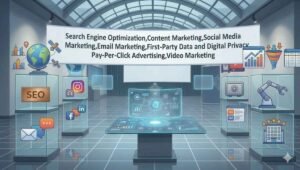
Some of the most common digital marketing channels include:
- Search Engine Optimization (SEO)
- Content Marketing
- Social Media Marketing
- Email Marketing
- Pay-Per-Click Advertising (PPC)
- Video Marketing
- Local Digital Marketing
When these channels work together, they help small businesses create a consistent online presence and attract potential customers throughout the buying journey.
Why Digital Marketing Is Important for Small Businesses in 2026
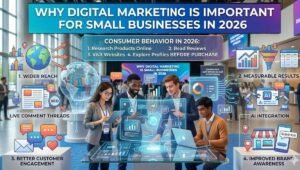
Consumer habits have changed dramatically over the last decade. Most people now research products online before making a purchase decision. They often read reviews, visit company websites, and explore social media profiles before choosing a business.
Digital marketing allows small businesses to connect with these online audiences and build trust before a customer even makes contact.
Some of the main advantages include:
Wider Reach
Digital marketing enables small businesses to reach customers beyond their local area. Even a small brand can connect with people across different regions or countries through online platforms.
Measurable Results
Digital campaigns generate detailed analytics. Businesses can track website traffic, conversions, engagement levels, and other metrics that help improve future marketing strategies.
Better Customer Engagement
Online platforms allow direct interaction with customers through comments, messages, emails, and reviews. This interaction builds trust and strengthens relationships.
Improved Brand Awareness
Consistent online marketing helps customers recognize and remember a brand. Over time, this recognition leads to higher credibility and customer loyalty.
Key Strategies for Digital Marketing Success in 2026
Search Engine Optimization (SEO)
Search Engine Optimization is the process of improving a website so that it appears higher in search engine results. When potential customers search for products or services online, SEO helps ensure that a business website appears among the relevant results.
SEO involves multiple elements including website structure, keyword usage, content quality, and technical performance. Businesses that focus on SEO are able to attract organic traffic from search engines without relying entirely on paid advertising.
Important elements of SEO include:
- Keyword research
- Optimized page titles and descriptions
- High-quality website content
- Mobile-friendly website design
- Fast loading speeds
- Quality backlinks from reputable websites
Long-tail keywords are especially important for small businesses because they are more specific and often face less competition in search results. For example, instead of targeting a broad keyword like “bakery,” a more specific phrase such as “organic bakery in Brooklyn” can help attract customers who are searching for a particular product or location.
SEO is considered a long-term strategy, but it is one of the most effective ways to build sustainable website traffic.
Content Marketing
Content marketing focuses on creating useful and informative content that helps customers learn, solve problems, or make better purchasing decisions.
Rather than directly promoting products in every message, content marketing provides value to the audience first. Over time, this approach builds trust and positions a business as an authority in its field.
Content marketing can include:
- Blog articles
- Educational guides
- Tutorials
- Infographics
- Case studies
- Podcasts
- Video content
When businesses consistently publish high-quality content, they improve their chances of ranking in search engines and being discovered by potential customers.
Content marketing also supports other digital marketing strategies. Blog posts can be shared on social media, included in email newsletters, and used to answer common customer questions.
Social Media Marketing
Social media platforms have become essential marketing channels for businesses of all sizes. They allow companies to connect directly with audiences, share updates, promote products, and engage with customers.
Popular platforms used by small businesses include:
- TikTok
- YouTube
Each platform serves a slightly different purpose. For example, visual platforms like Instagram and TikTok focus heavily on images and short videos, while LinkedIn is commonly used for professional networking and business-to-business communication.
Effective social media marketing includes consistent posting, engaging with followers, responding to comments, and sharing content that reflects the brand’s values and identity.
Short-form video content has become especially influential in recent years. Many businesses use short videos to demonstrate products, share tips, or show behind-the-scenes moments that help humanize their brand.
Email Marketing
Email marketing continues to be one of the most reliable communication channels for businesses. Unlike social media platforms, where algorithms determine who sees content, email messages reach subscribers directly in their inbox.
Businesses often use email marketing to send:
- Company newsletters
- Product announcements
- Educational resources
- Promotional offers
- Event invitations
- Customer updates
Building an email list allows businesses to maintain long-term relationships with customers. Subscribers who receive valuable and relevant content are more likely to stay engaged with the brand.
Email marketing platforms also provide analytics that help businesses understand how many people open their messages, click links, or interact with the content.
First-Party Data and Digital Privacy
Digital privacy has become a major focus in modern marketing. Many online platforms are reducing reliance on third-party cookies due to stricter privacy regulations and changing technology standards.
Because of this shift, businesses are increasingly focusing on collecting and managing their own customer data. This information is known as first-party data.
First-party data may include:
- Email subscribers
- Customer purchase history
- Website behavior
- Loyalty program membership
- Customer feedback
Owning this data allows businesses to communicate directly with customers and personalize marketing campaigns without depending entirely on external platforms.
First-party data also strengthens customer relationships because it enables businesses to better understand preferences, interests, and purchasing patterns.
Pay-Per-Click Advertising (PPC)
Pay-Per-Click advertising allows businesses to place ads on search engines or social media platforms. Instead of paying for ad placement alone, businesses pay when users click on the advertisement.
PPC advertising helps businesses quickly reach potential customers who are actively searching for relevant products or services.
Common PPC platforms include:
- Google Ads
- Facebook Ads
- Instagram Ads
- LinkedIn Ads
Businesses often use PPC advertising to promote new products, increase website traffic, or generate leads.
PPC campaigns provide detailed analytics, allowing businesses to track impressions, clicks, and conversions. These insights help marketers refine their campaigns and improve performance over time.
Video Marketing
Video marketing has become one of the most powerful forms of digital communication. Many consumers prefer watching videos rather than reading long blocks of text.
Videos can help businesses demonstrate products, explain services, and tell compelling stories about their brand.
Types of video content commonly used in marketing include:
- Product demonstrations
- Customer testimonials
- Educational tutorials
- Brand storytelling
- Behind-the-scenes content
- Live streaming events
Platforms like YouTube, Instagram Reels, and TikTok make it easier for businesses to share video content with large audiences.
Because video is highly engaging, it often generates stronger interaction and longer viewing times compared to other content formats.
Visual Content and Design Tools
Visual content plays an important role in digital marketing. Images, graphics, and infographics make information easier to understand and more appealing to audiences.
Many small businesses create visual content for:
- Social media posts
- Marketing presentations
- Blog graphics
- Infographics
- Promotional banners
Design platforms such as Canva and Adobe Express provide customizable templates that help businesses create professional-looking visuals without needing advanced design skills.
Using consistent brand colors, fonts, and logos across visual content helps create a recognizable brand identity.
AI-Powered Marketing Tools
Artificial intelligence is transforming digital marketing in 2026. AI-powered platforms help automate repetitive tasks, analyze marketing data, and improve campaign performance.
Many businesses use AI to support activities such as:
- Content creation
- Social media scheduling
- Customer support chatbots
- Marketing automation
- Data analysis and reporting
All-in-one marketing platforms are becoming increasingly popular because they allow businesses to manage multiple marketing functions from a single dashboard.
Automation helps small business owners save time while maintaining consistent marketing efforts.
Common Digital Marketing Mistakes Small Businesses Should Avoid
Even with access to modern tools, many businesses struggle with digital marketing due to common mistakes.
Some of the most frequent challenges include:
Trying Too Many Platforms at Once
Focusing on a few relevant platforms is often more effective than trying to manage every available channel.
Inconsistent Content Creation
Irregular posting can reduce visibility and engagement.
Ignoring Analytics
Marketing decisions should be guided by performance data rather than assumptions.
Weak Brand Identity
Inconsistent messaging, colors, or visuals can make a brand appear less professional.
Expecting Immediate Results
Some marketing strategies require time to produce significant results, especially those focused on long-term visibility and audience growth.
Frequently Asked Questions (FAQs)
1. What is digital marketing for small businesses?
Digital marketing for small businesses refers to promoting products or services through online channels such as search engines, social media platforms, email campaigns, and digital advertisements.
2. Which digital marketing strategy is most effective?
The most effective strategy often combines several approaches including SEO, content marketing, social media engagement, and email communication.
3. Why is SEO important for small businesses?
SEO helps websites appear in search engine results when potential customers search for relevant products or services, increasing visibility and organic website traffic.
4. How does email marketing help businesses?
Email marketing allows businesses to communicate directly with subscribers, share updates, and build long-term relationships with customers.
5. What role does video play in digital marketing?
Video content helps businesses explain products, share information, and engage audiences more effectively than many other content formats.
Conclusion
Digital marketing offers powerful opportunities for small businesses to reach new audiences, strengthen customer relationships, and expand their market presence. As online technologies continue to evolve, businesses that adopt modern marketing strategies can compete effectively even with larger organizations.
Successful digital marketing involves combining multiple channels such as SEO, content marketing, social media engagement, email communication, paid advertising, and video content. At the same time, businesses must adapt to new trends such as data privacy changes, AI-driven tools, and personalized customer experiences.
By focusing on consistent communication, valuable content, and strong customer relationships, small businesses can build a sustainable digital presence and achieve long-term growth.
